What is The 39 Steps?
The 39 Steps is a comedy play set in 1930s. The play itself is adapted (by Patrick Barlow) from a movie (by Alfed Hitchcock), that is based on a book (John Buchan). This is a spy story-turned comedy show, emphasizing actor’s prowess in character strength and comedy through costumes and props.
I won first place at the American College Theater Festival for Excellence in Costume Design, as well as their BOLD in Design award at ACTF 2026!
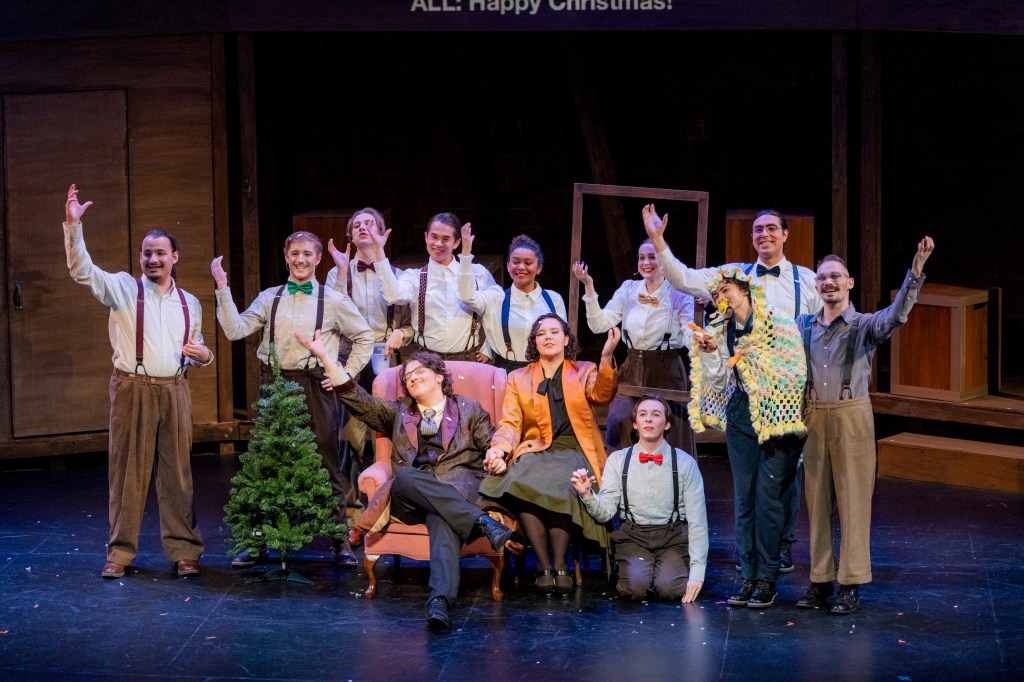
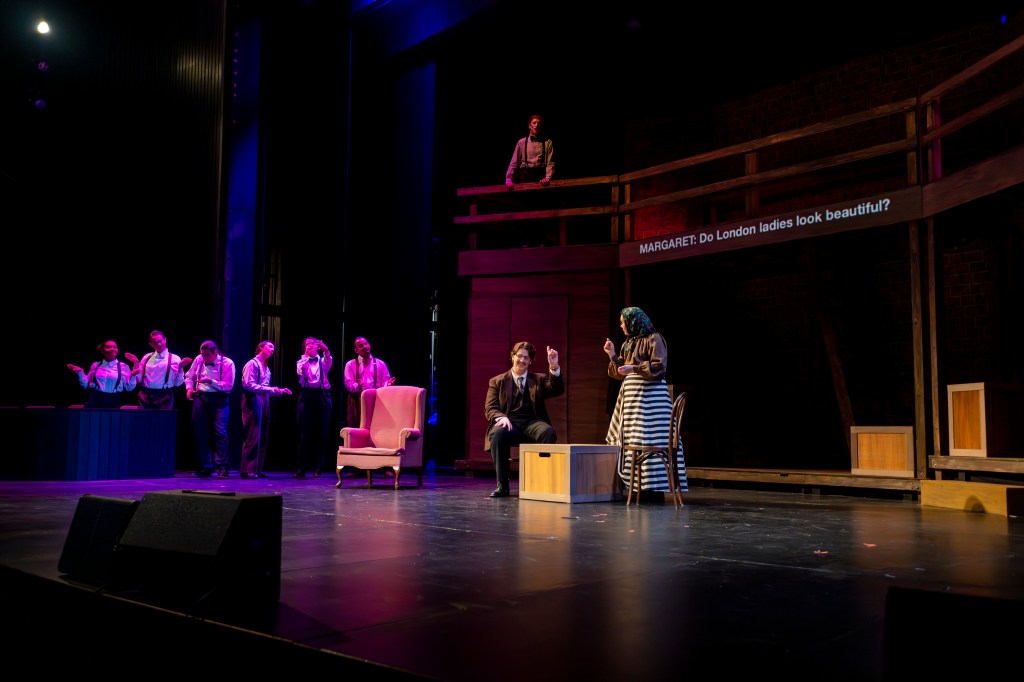
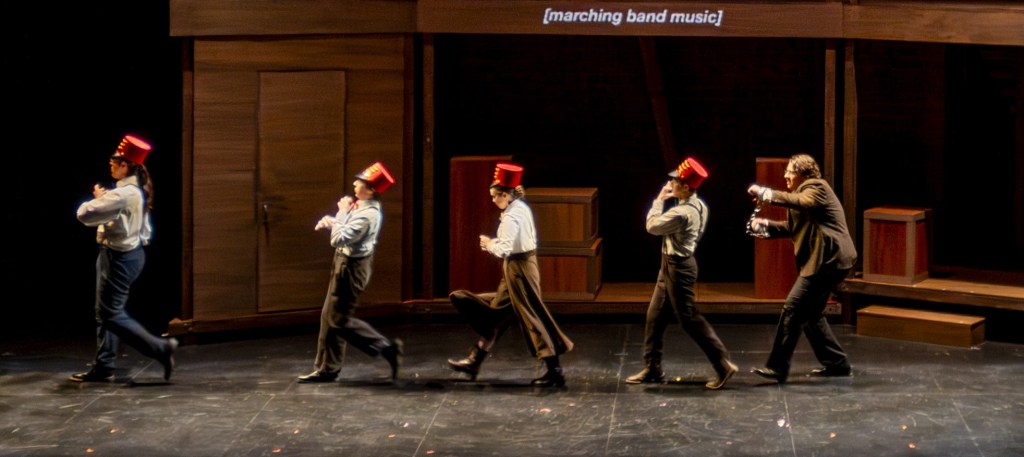
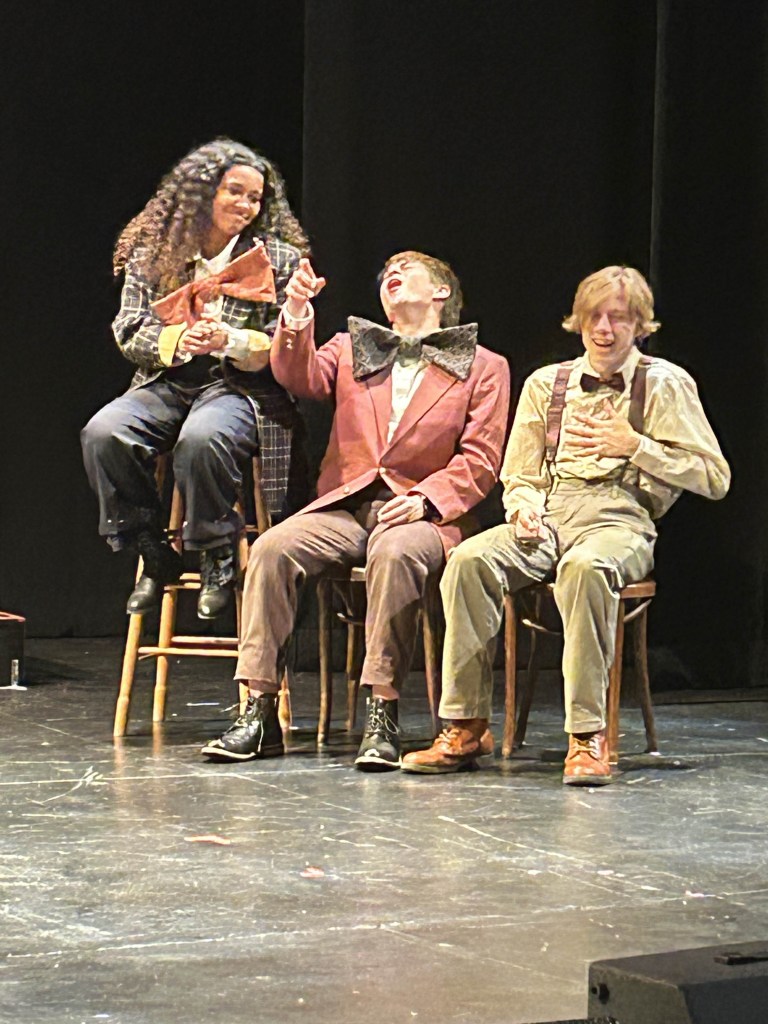
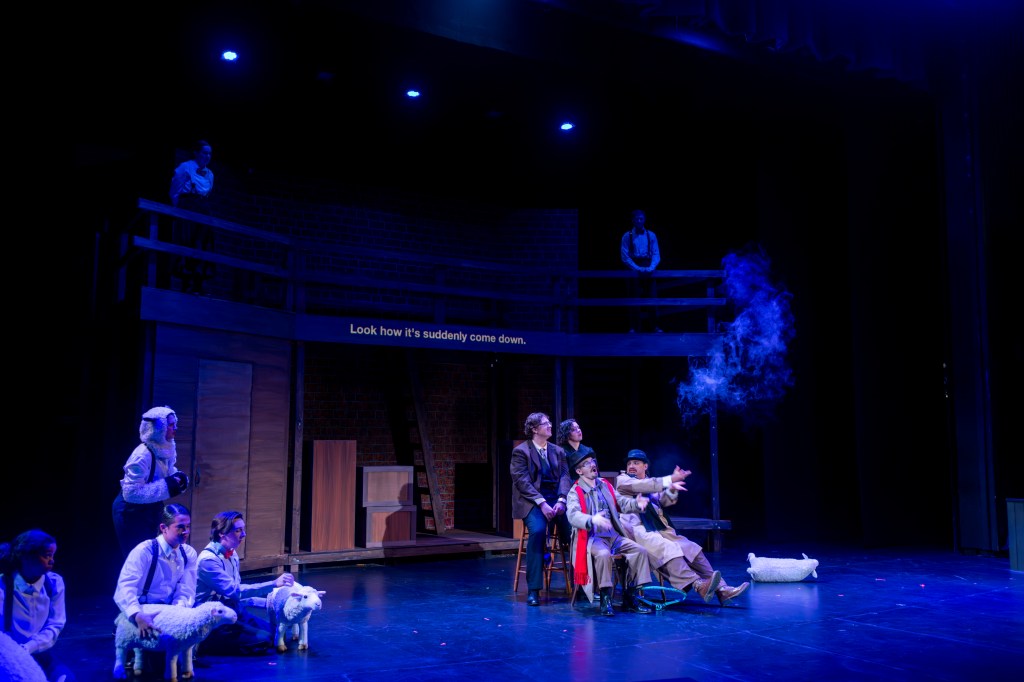
The show was originally written for a cast of 4, with two clown actors playing many characters. This cast was a cast of 12. 6 voicing actors who changed character by changing voice tone and expressions (with some costume changes). 6 signing actors who were the main visual focus, with many costume changes to portray each role clearly. That meant 4 “clowns” instead of the traditional 2.
Production Team:
Director: JW Guido
Assistant Director: Gabi Nocciolino
Technical Director: Eric Moslow
Assistant TD: Matthew Parsley
Stagecraft manager: Joseph Hamilton
Set Designer: Sacha Glasser
Costume Shop Manager: Rosie Mazique
Prop Master: Mac Leong
DASL: Ace Gray
Sound/Projection Designer: Dan Roach
Lighting Designer: Zach Riback
Marketing: Joseph Fox
Stage Manager: Mia McCoy
My Roles in this show:
Costume Designer
Costume and Prop Creator (part of the team with three other people working on building this show with me)
Makeup Designer
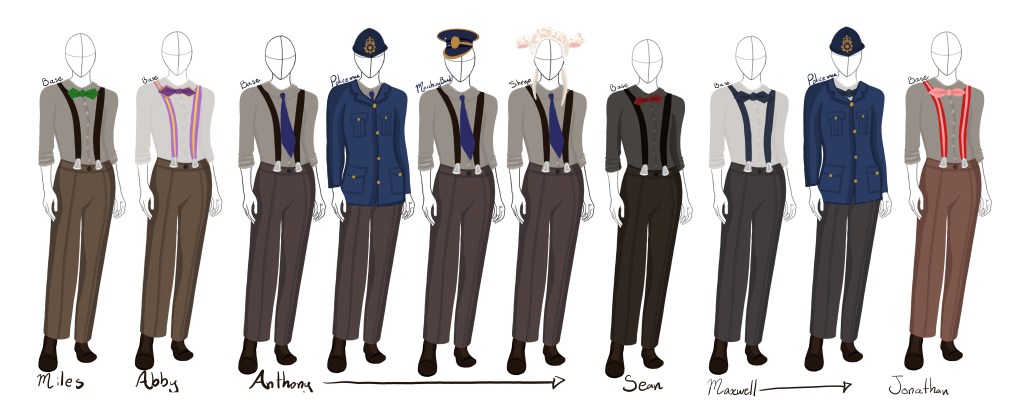
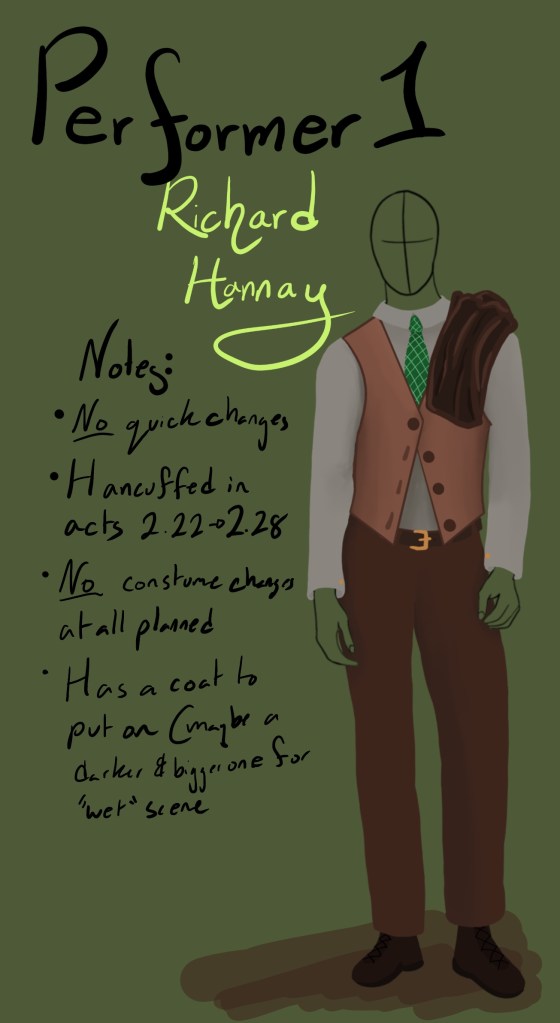
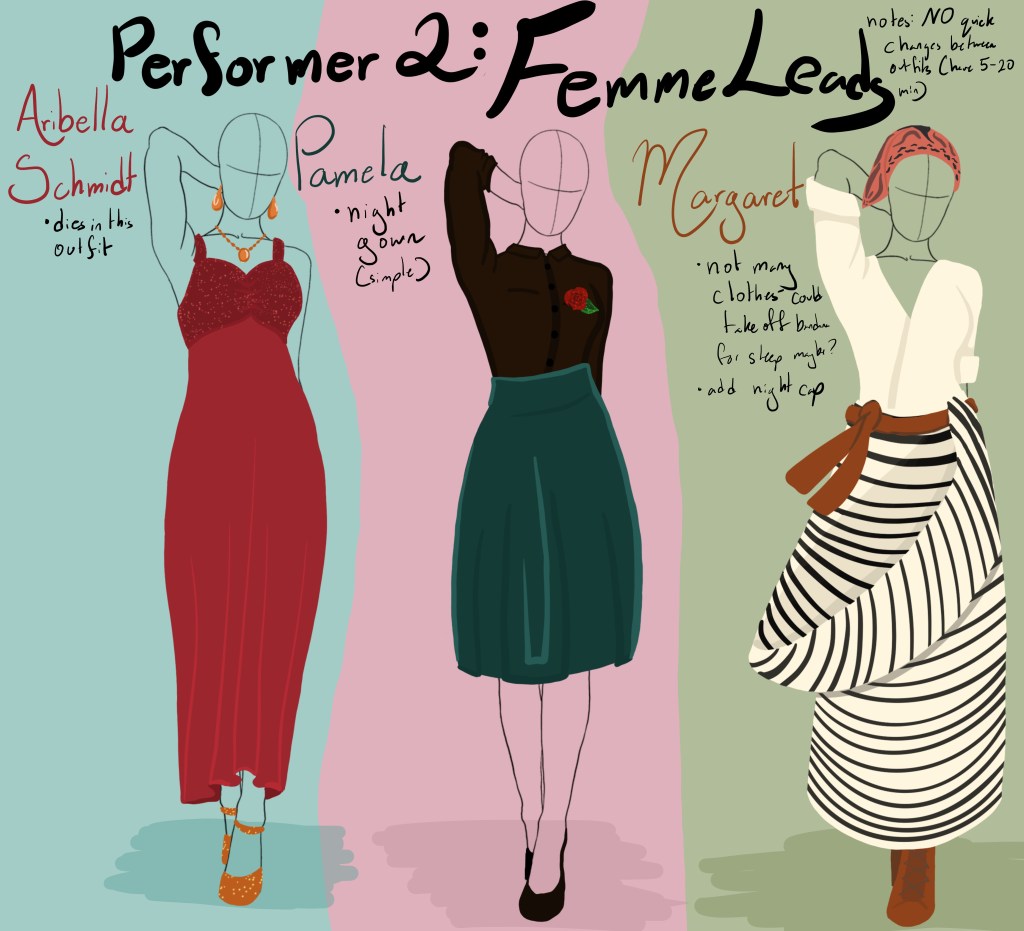
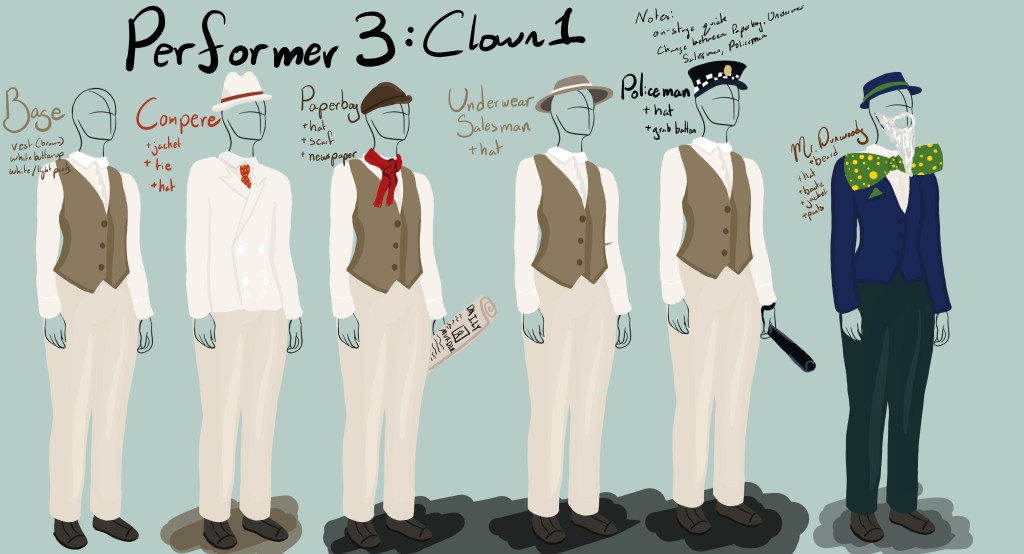
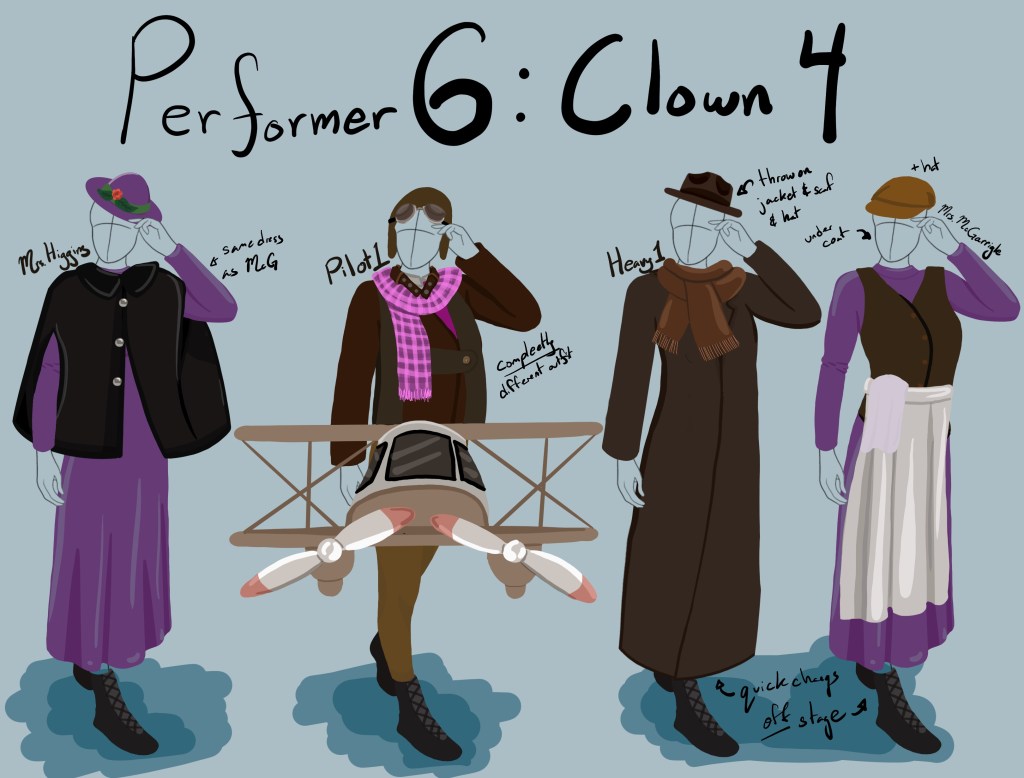
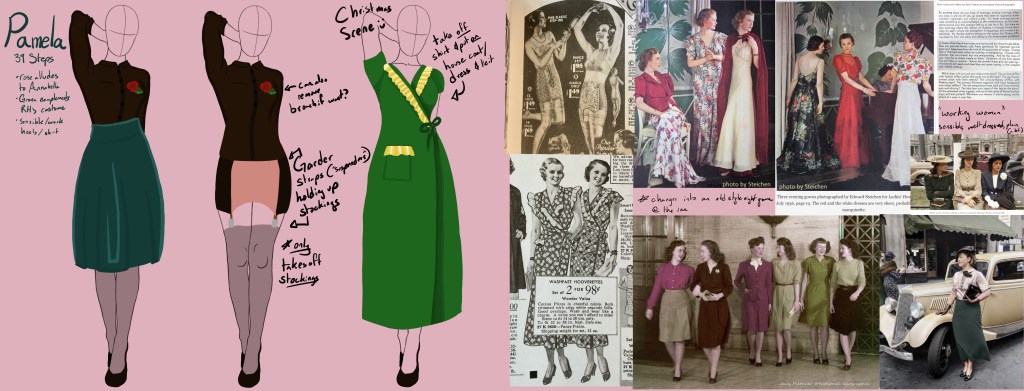
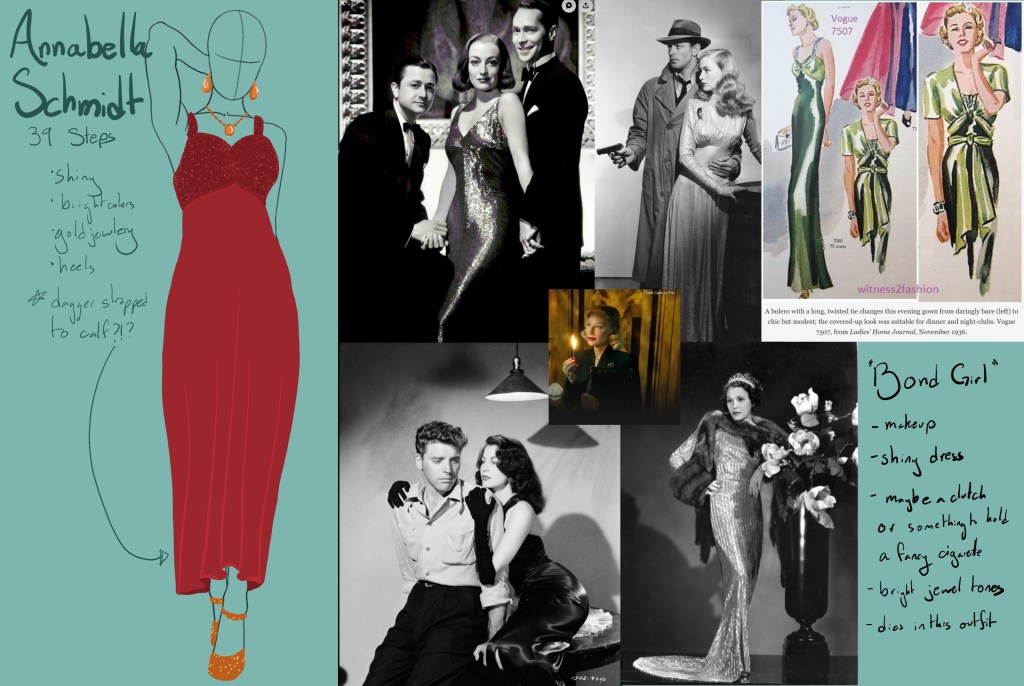
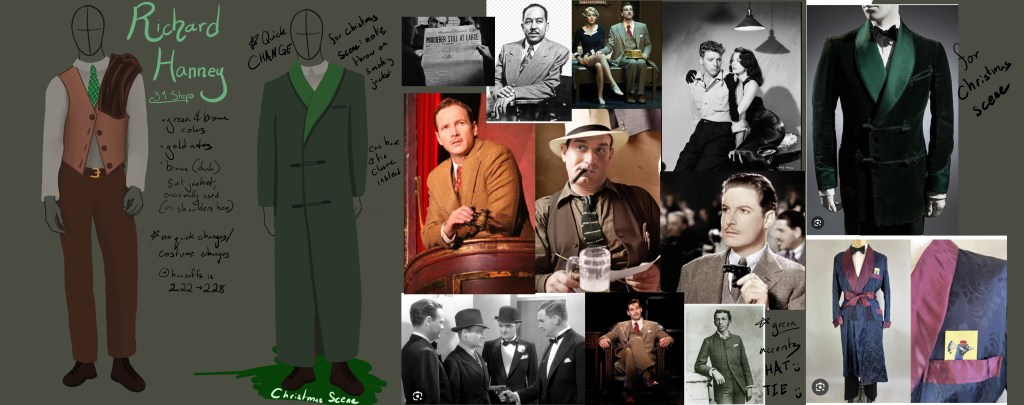
Below are the final designs. They are organized by actor, with the exception of the voicing actors, who are grouped together on one drawing to illustrate their cohesive costumes.
In each actor’s rendering, quick changes (on stage) are shown by connecting the “ground” the drawing is standing on.
Show Dates: November 7 through November 9th, 2025
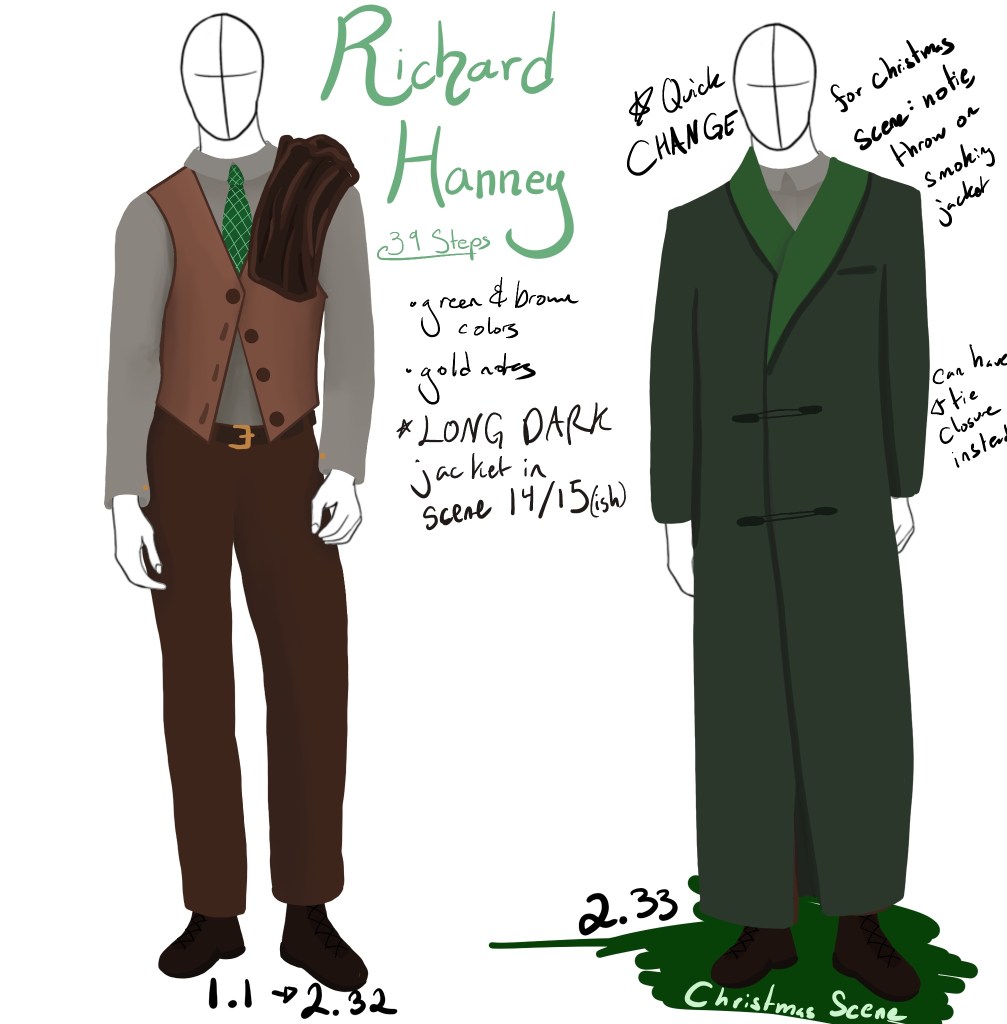
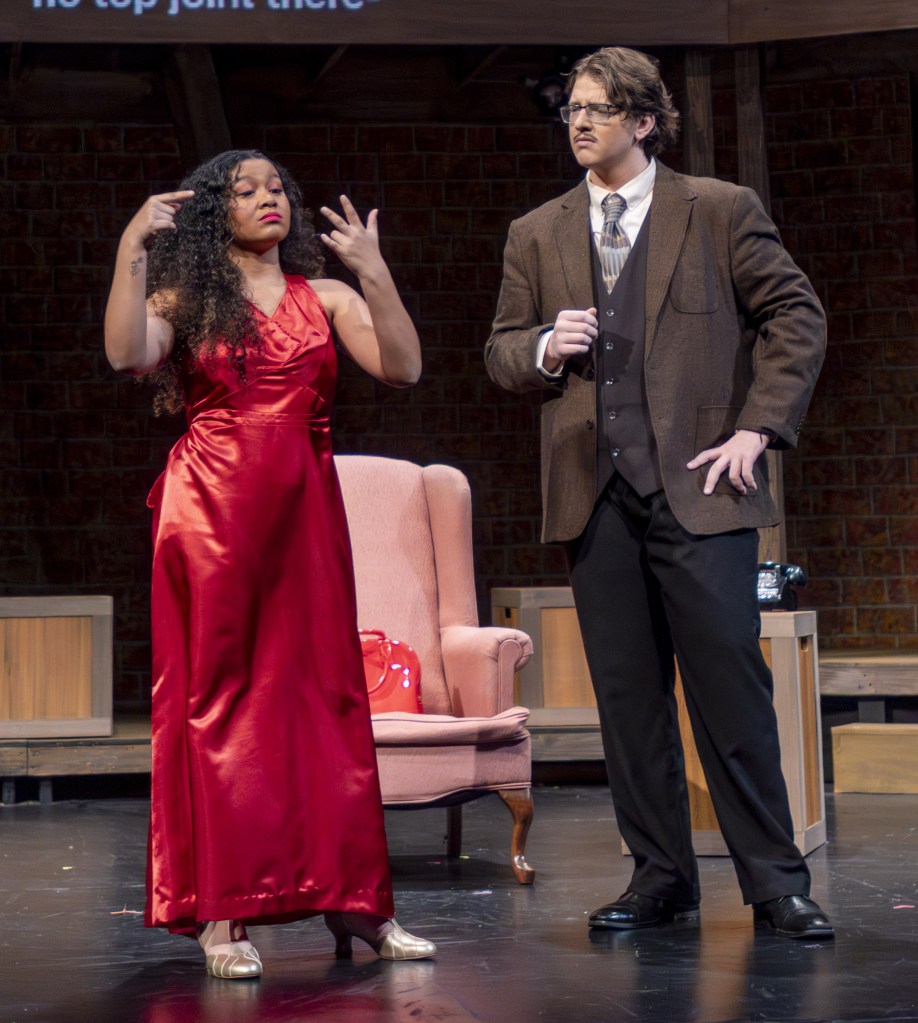
Richard Hannay was played by one actor throughout the show, with minor costume changes (a smoking jacket at the end of the show).
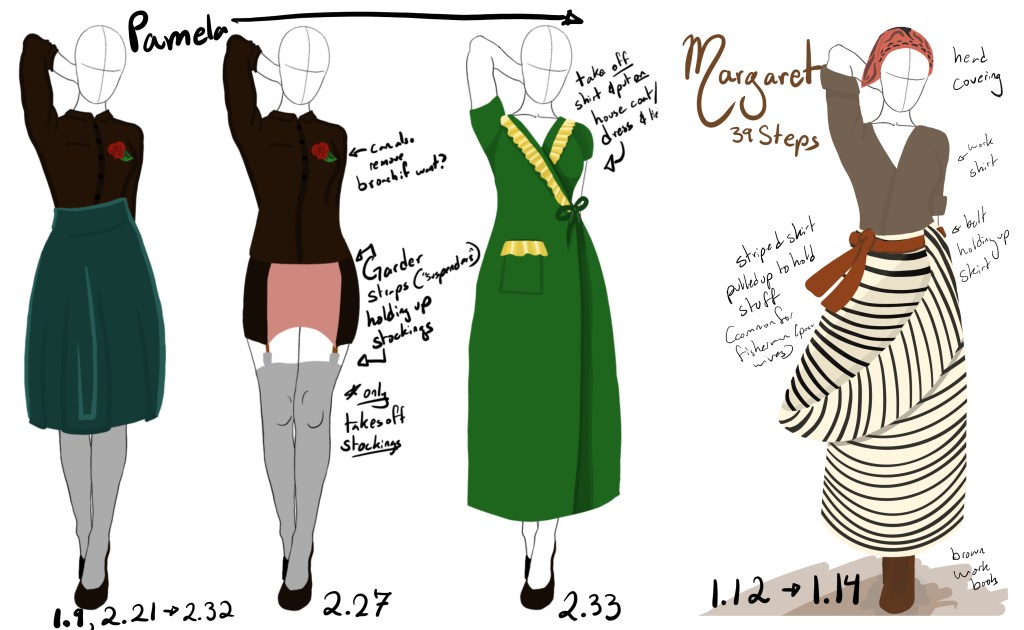
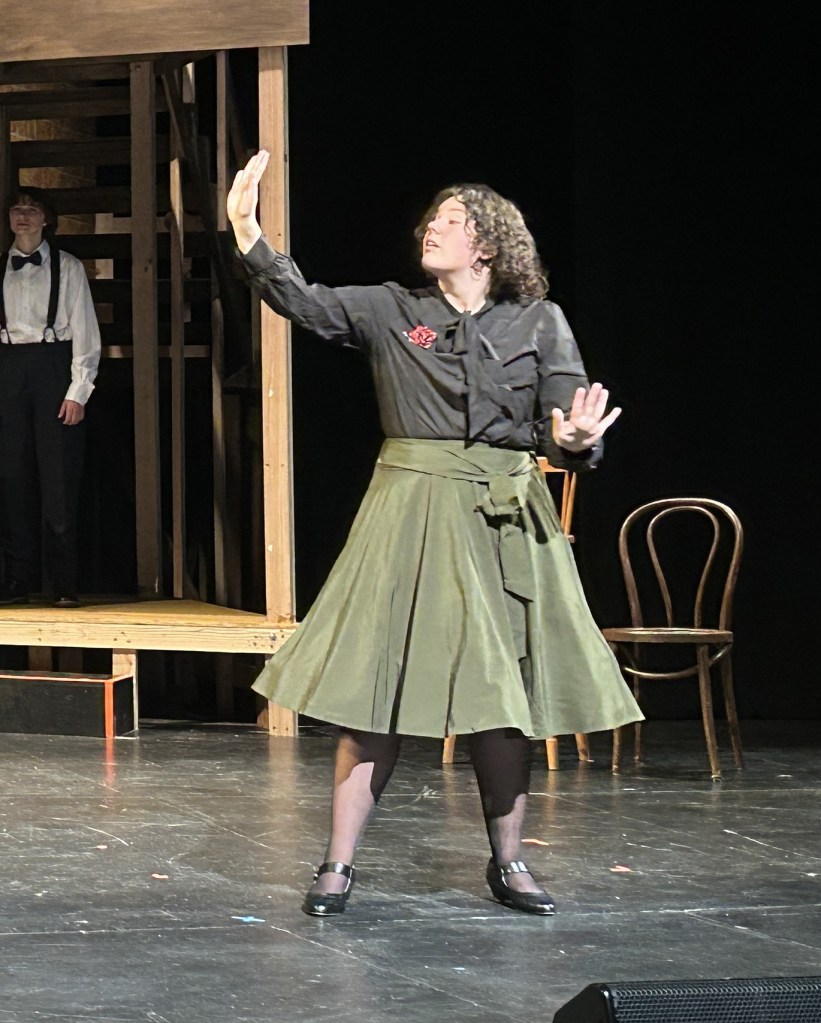
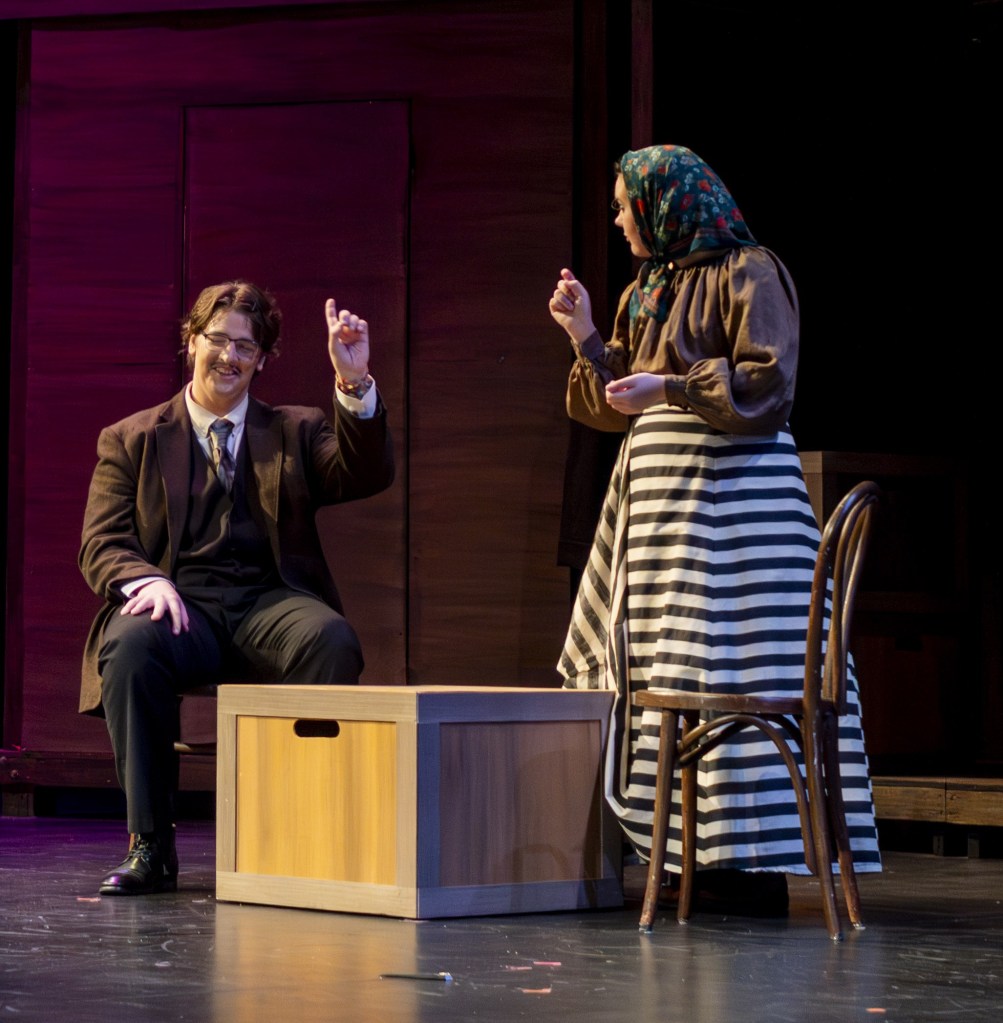
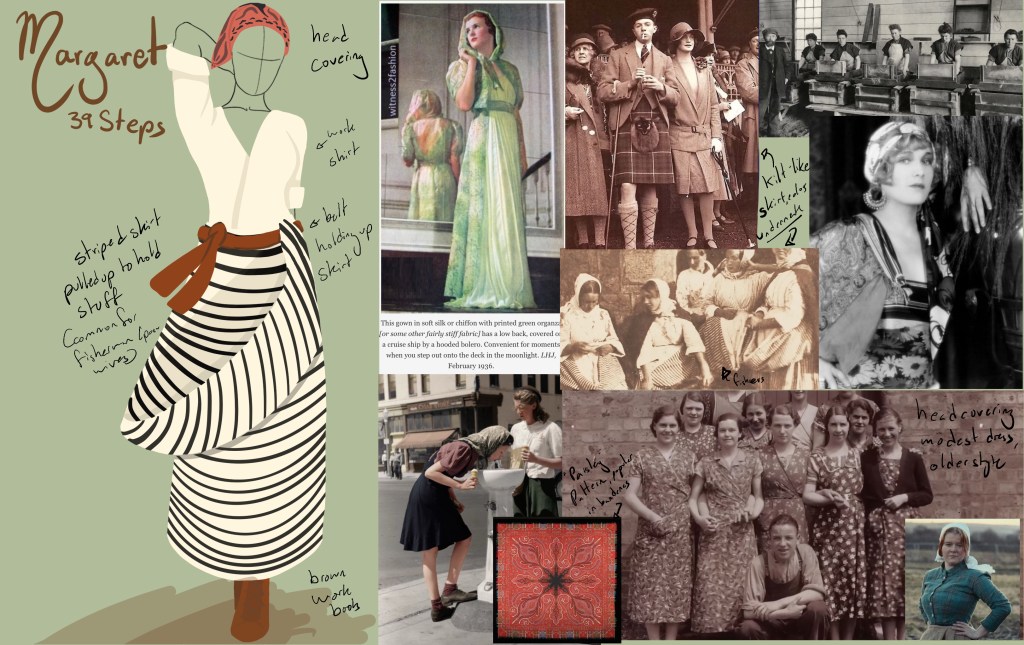
Pamela and Margaret were played by one actor. Making the stripped skirt a wrap skirt made it very easy to change between the characters.
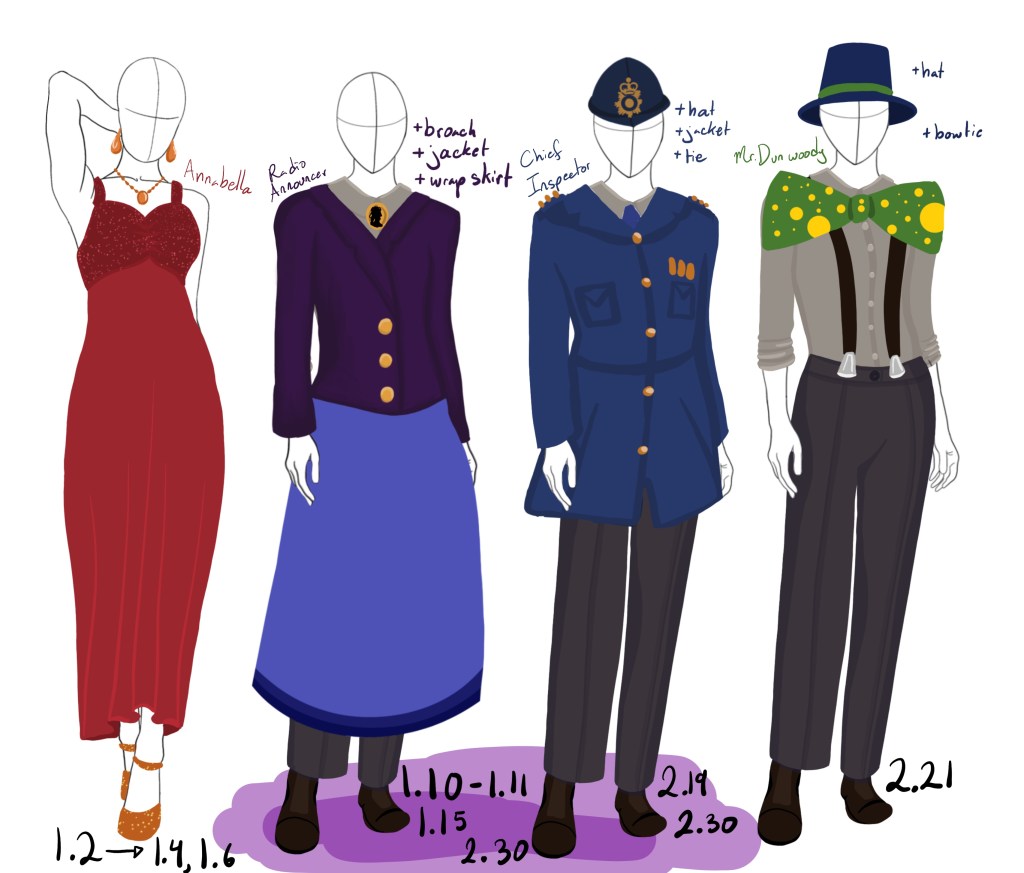
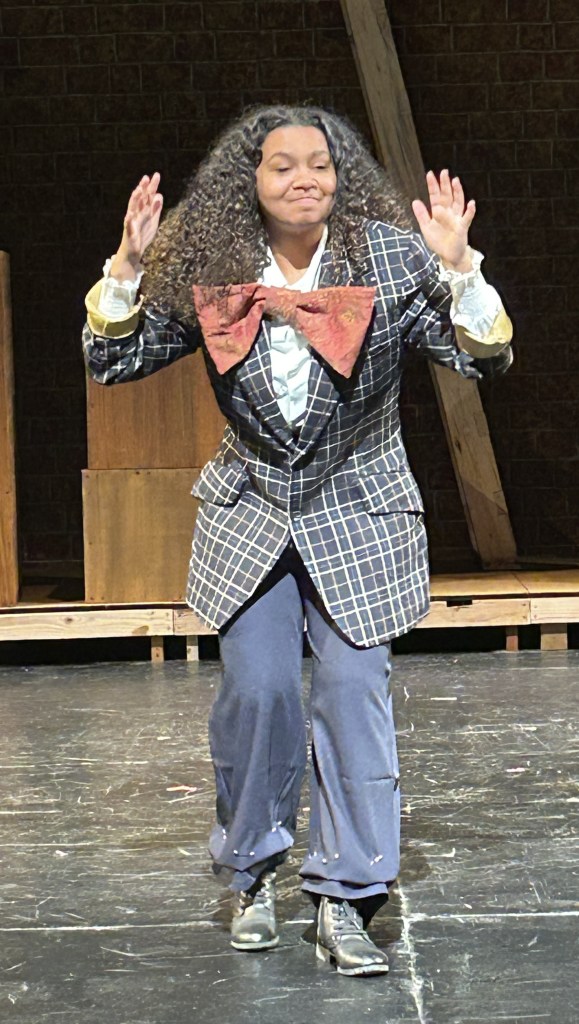
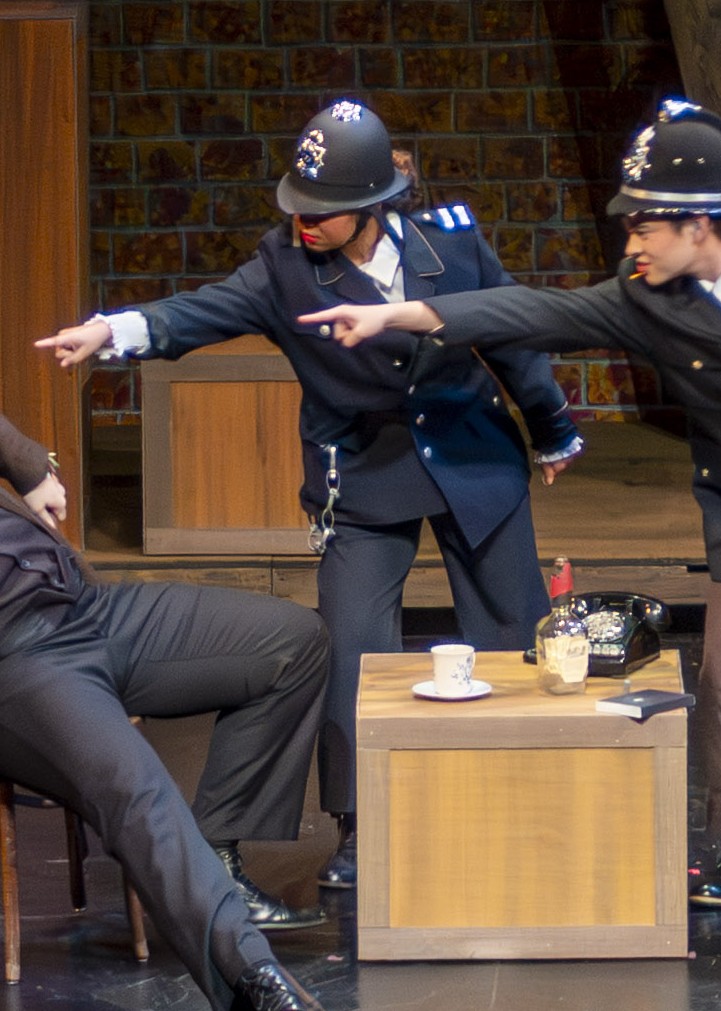
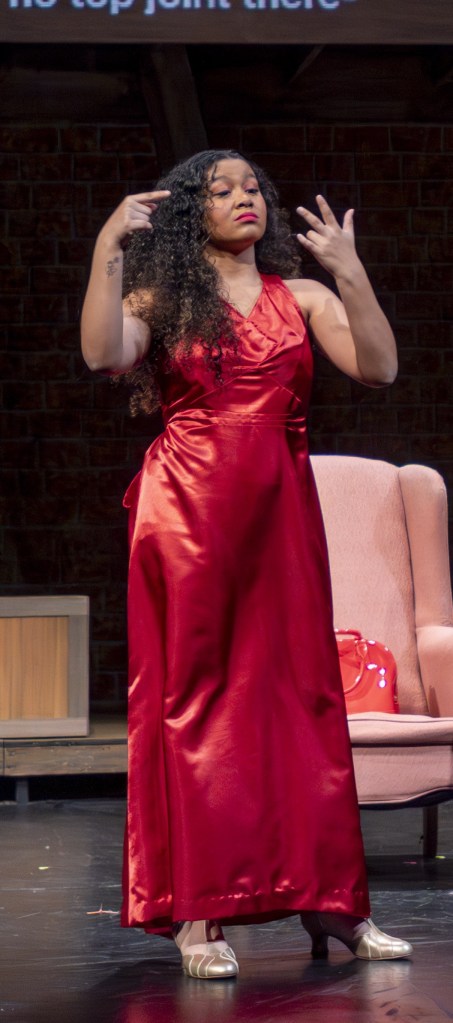
Annabella, the Radio Announcer, the Chief Inspector, and Mr. Dunwoody were all played by one actor.
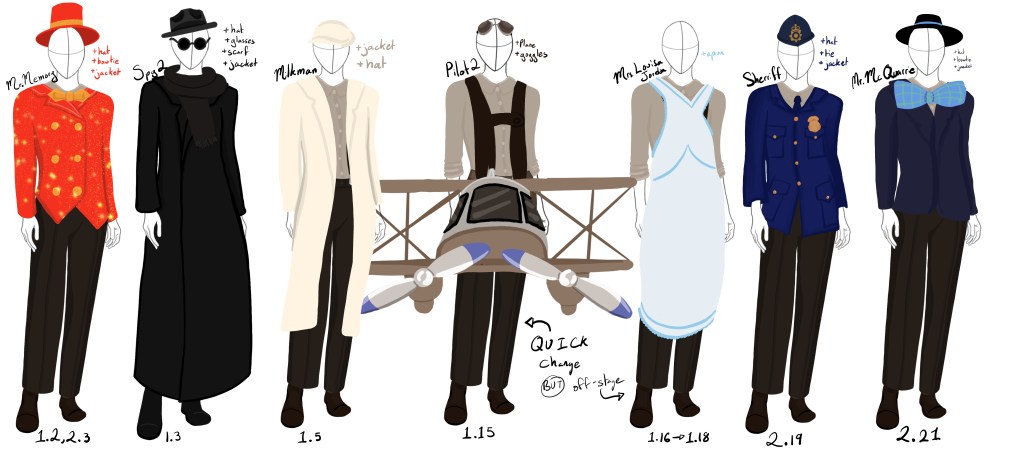
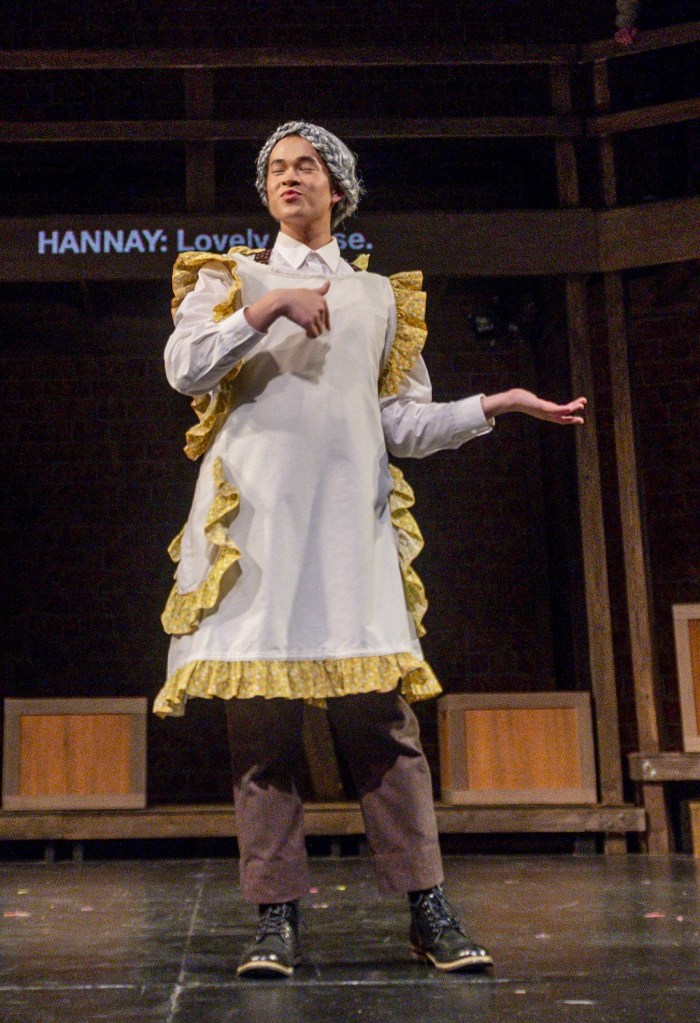
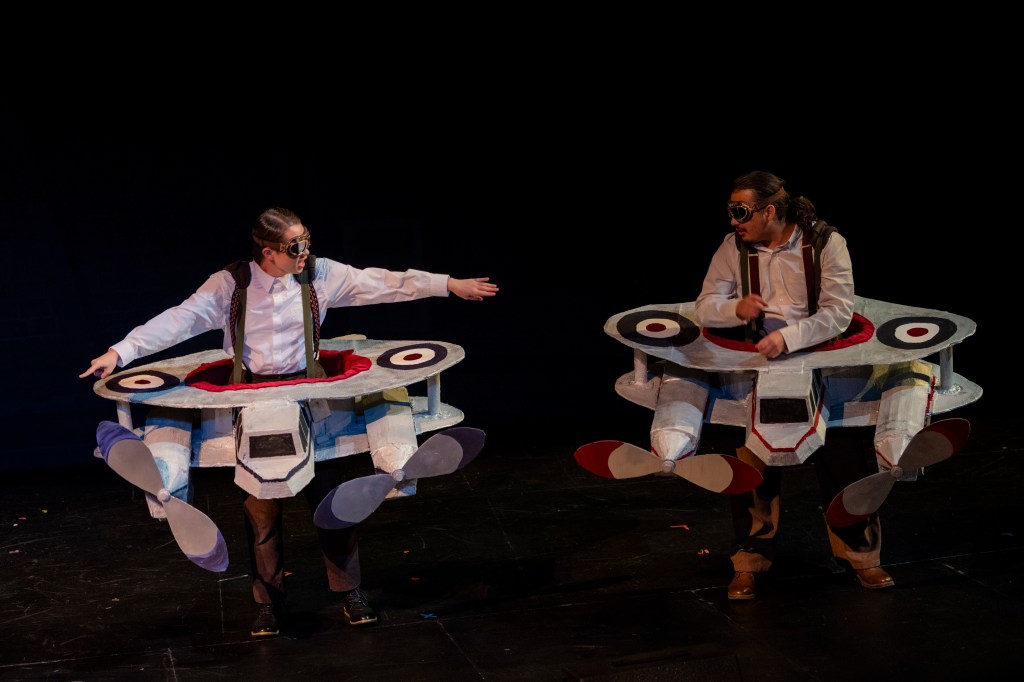
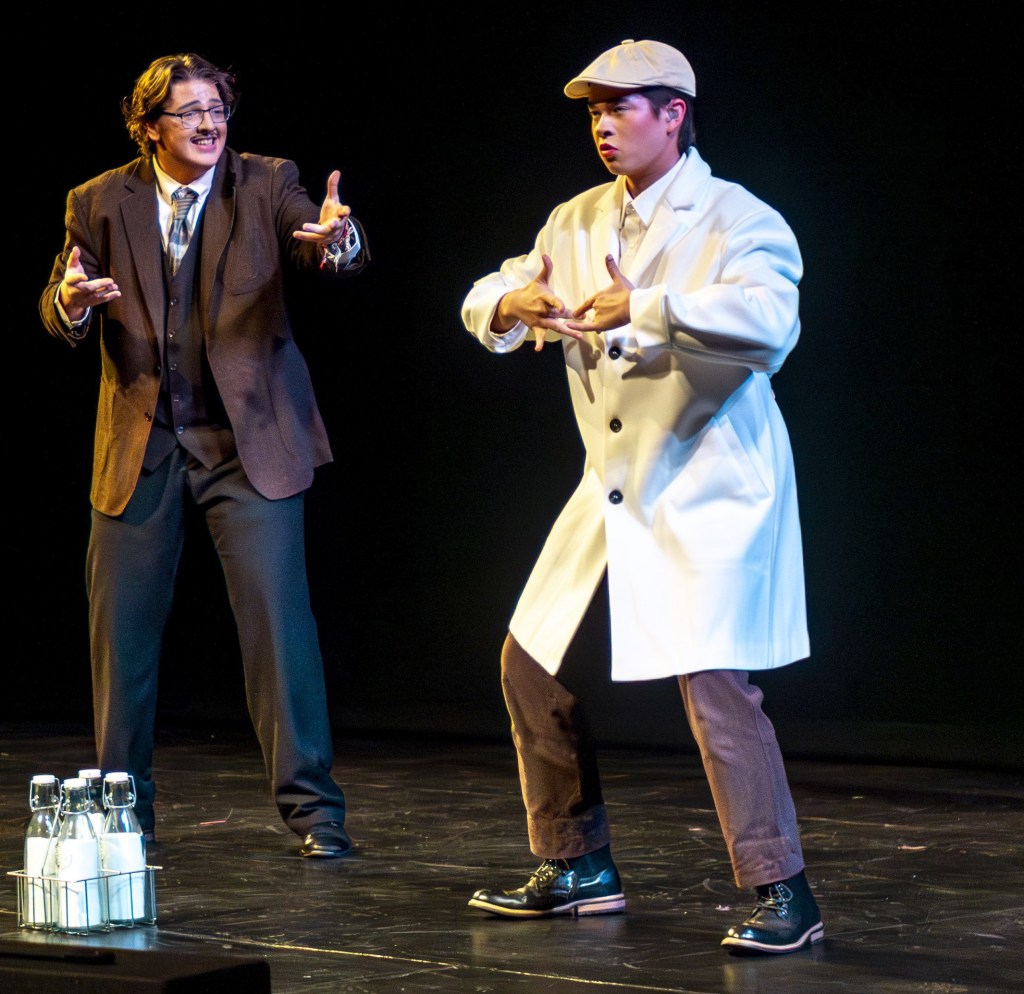
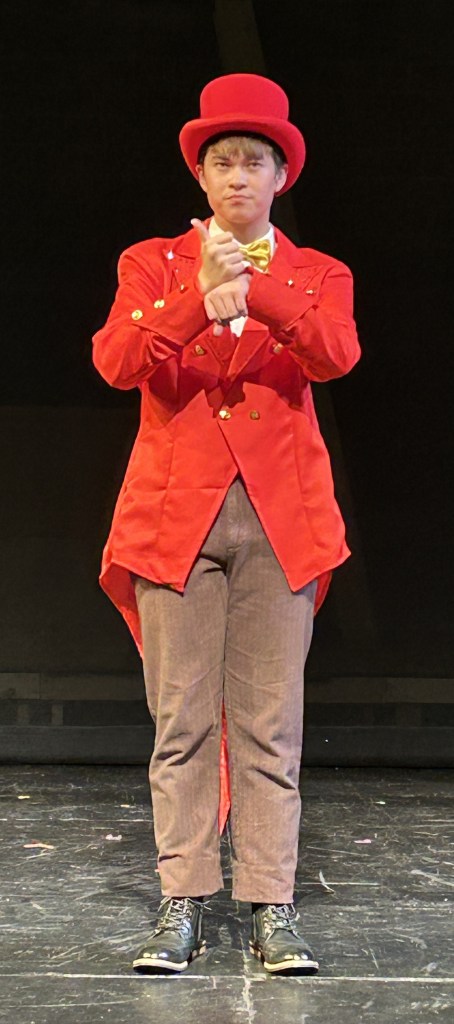
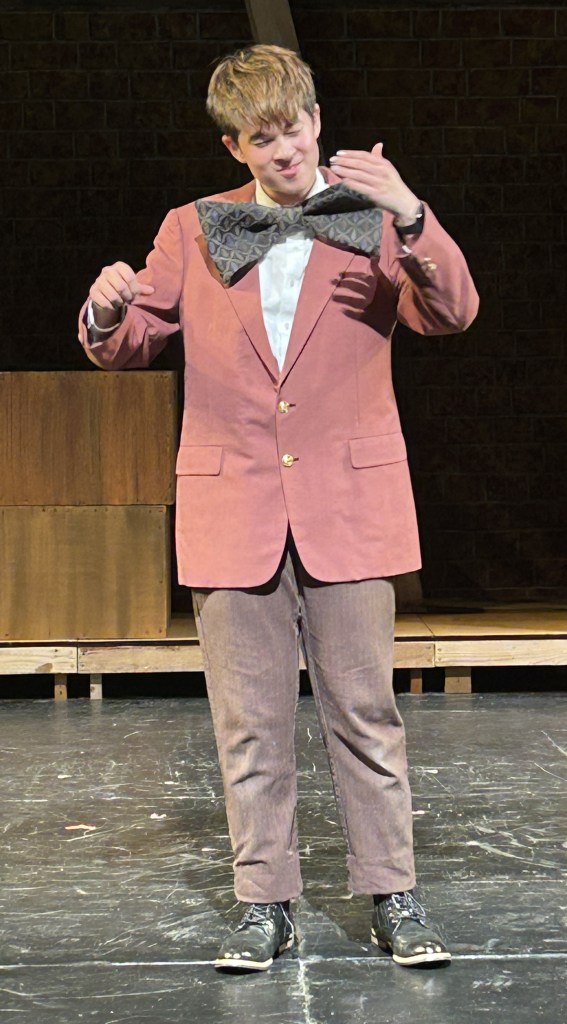
Mr. Memory, Spy 1, Milkman, Pilot 2, Mrs. Louisa Jordon, Sheriff, and Mr. Macquire are all played by one actor. This required many complex costume changes, but I mitigated the effort needed by having one common base and only needing to swap around jackets and outer layers.
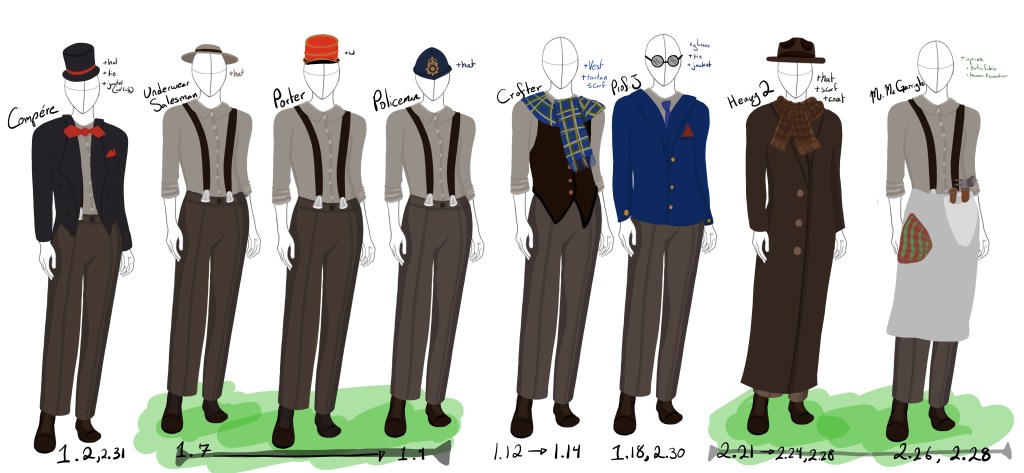
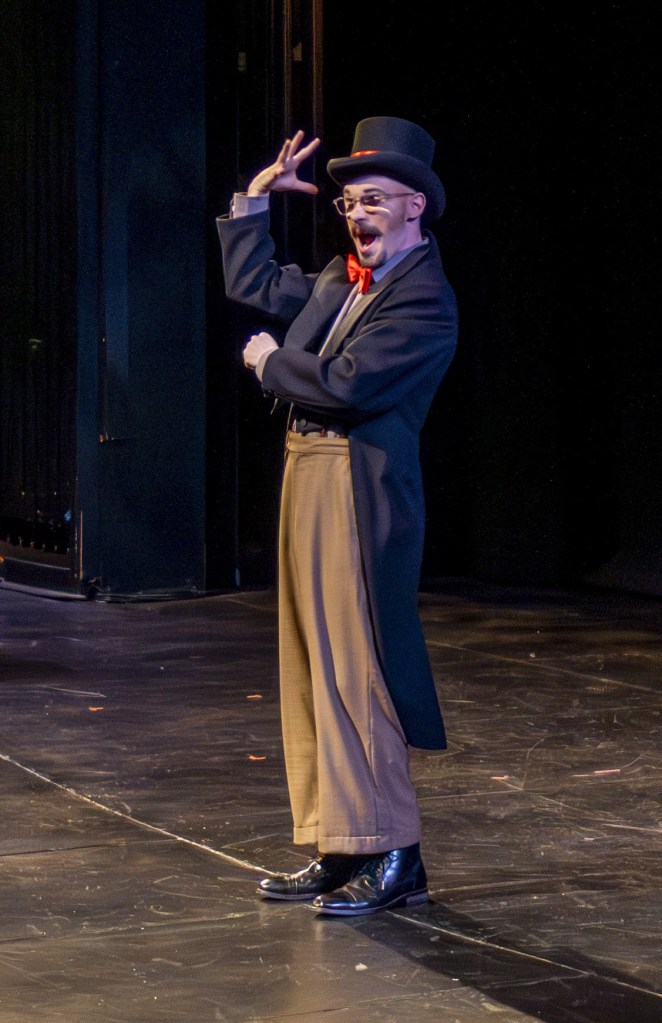
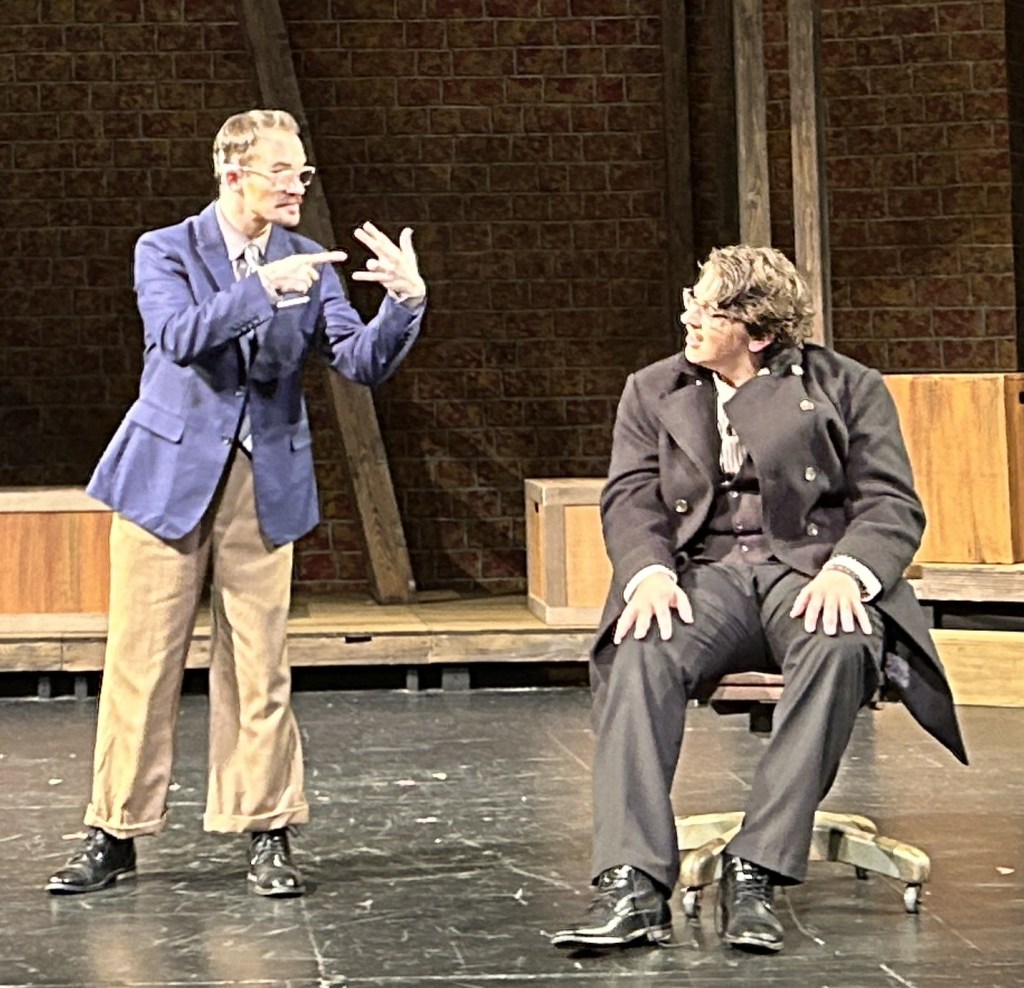
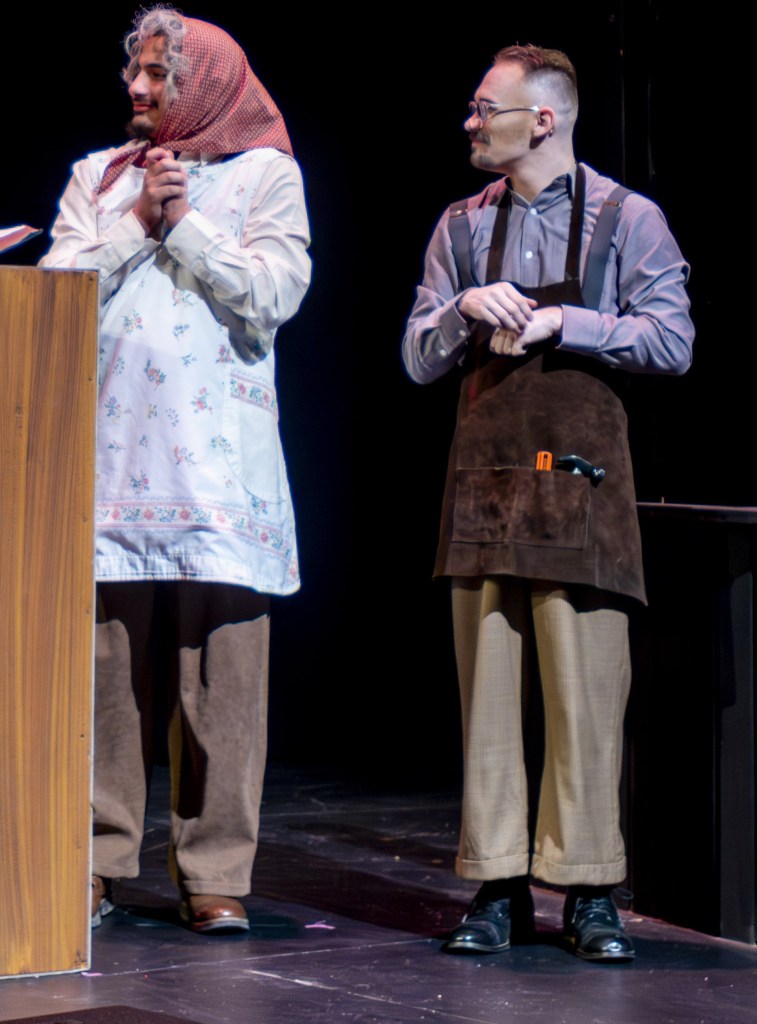
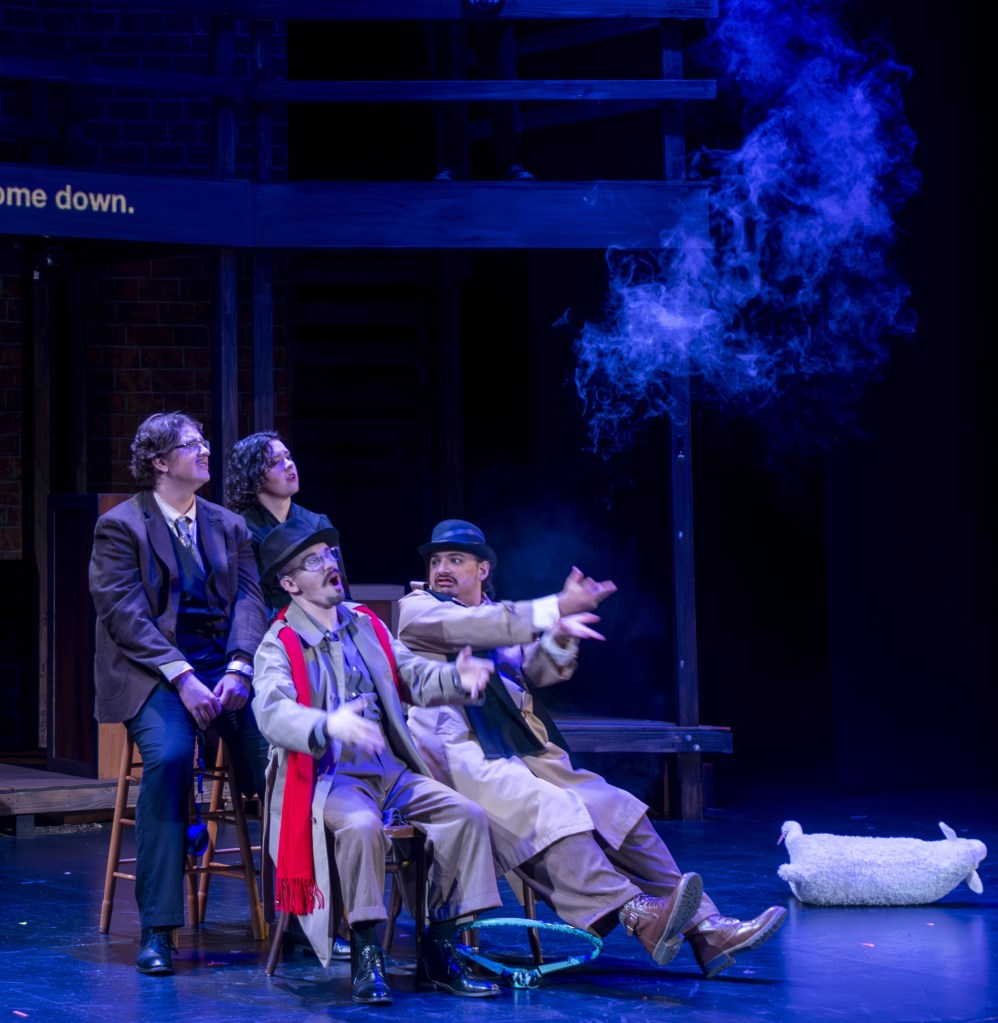
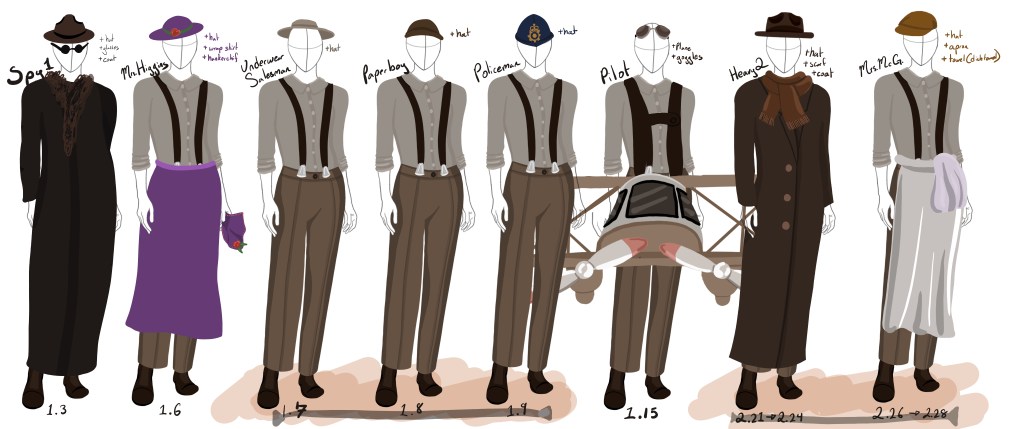
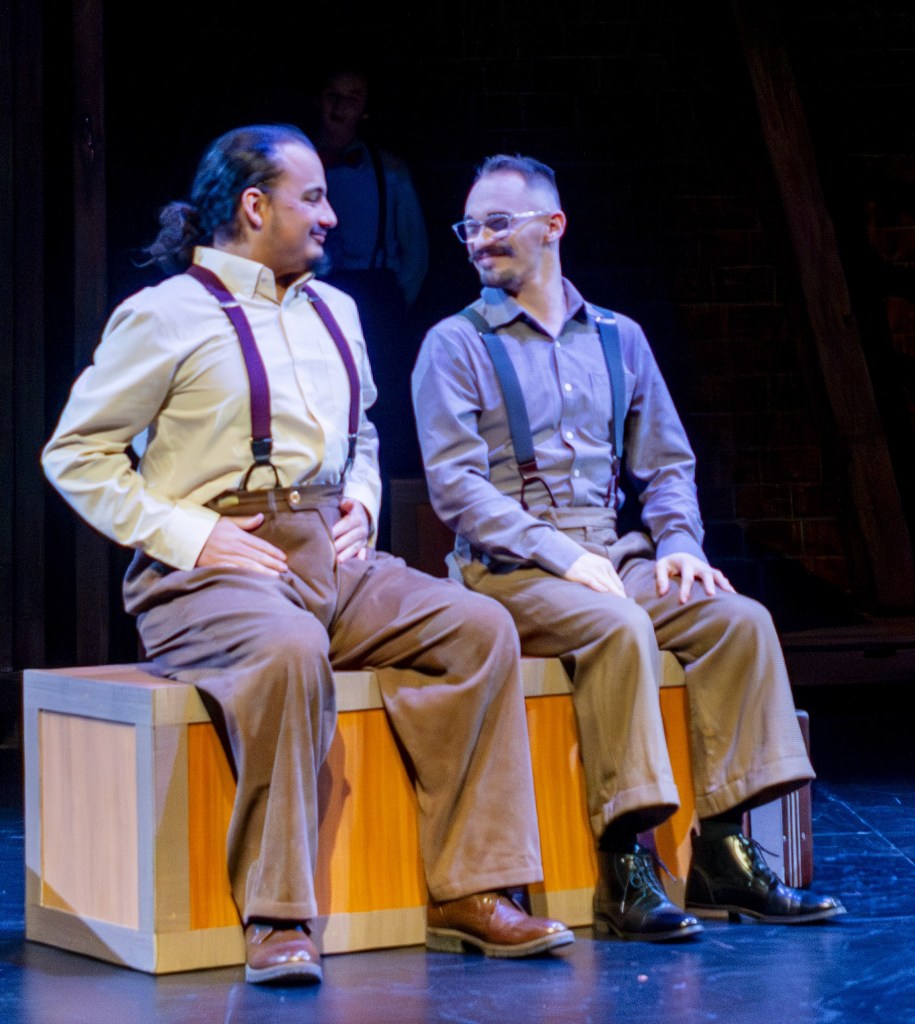
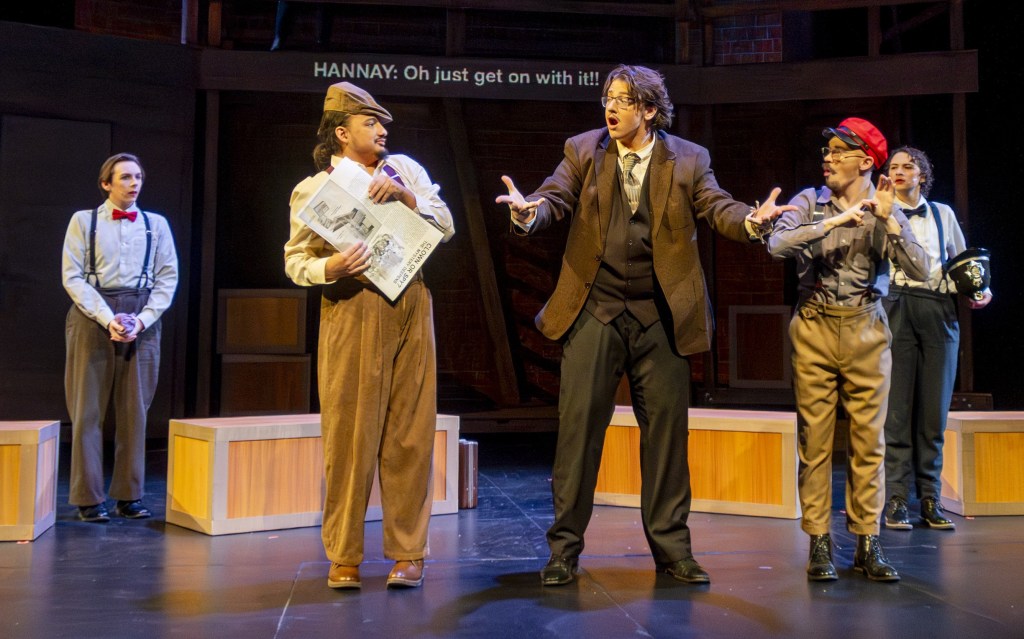
The below costume renderings are for voicing actors- only two of these had intense changes (changes that weren’t a hat). These actors were on stage, and often times had a visual role to perform as well as a voice role, which lead to them splitting themselves- their voice was acting one way, while their body showed something else.
The Process: Paperwork, Planning, and Preparation
Summer Work May 2025- August 2025
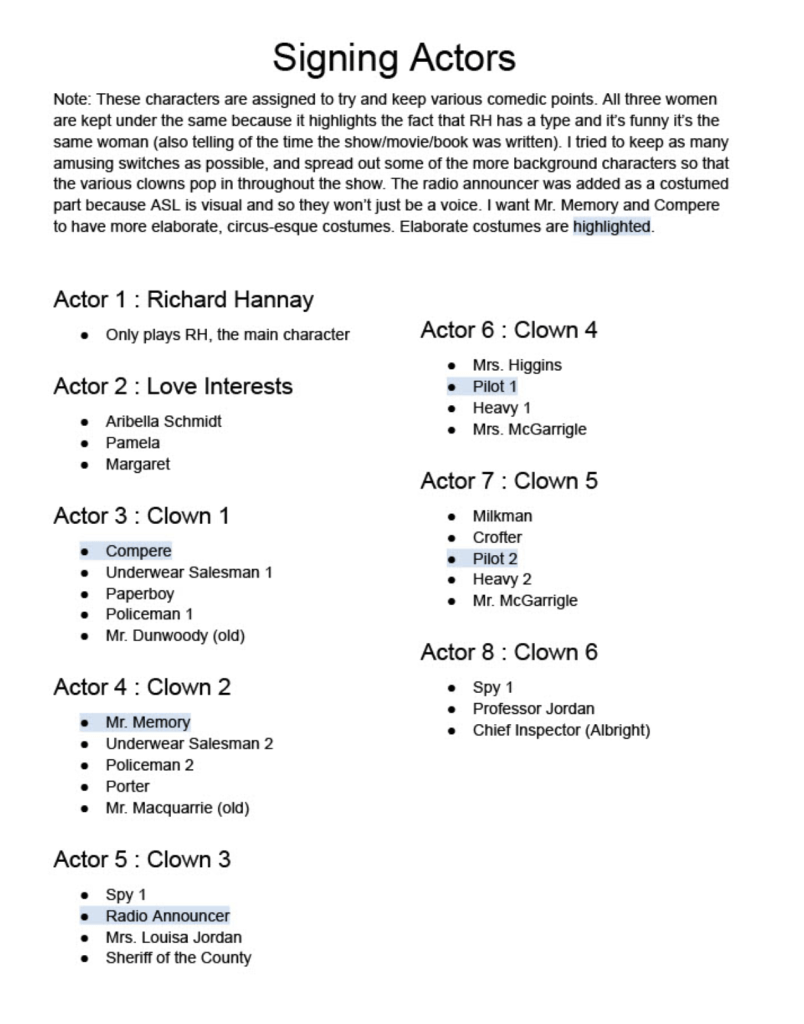
We did not know how many actors would be in the show- we knew that there would be more than the traditional 4 actors. Our show would be double-cast at the least (4 ASL, 4 English actors), but the director wanted to give more opportunities to our actors and wanted a maximum of 8 ASL 8 English actors.
I created an ideal cast list for purposes of roughly blocking out quick changes required, then doing an initial sketch for the costume designs, focusing on the ASL actor group first.
I blocked out the costumes I imagined would be builds, and made sure each actor was getting a significant amount of stage time.
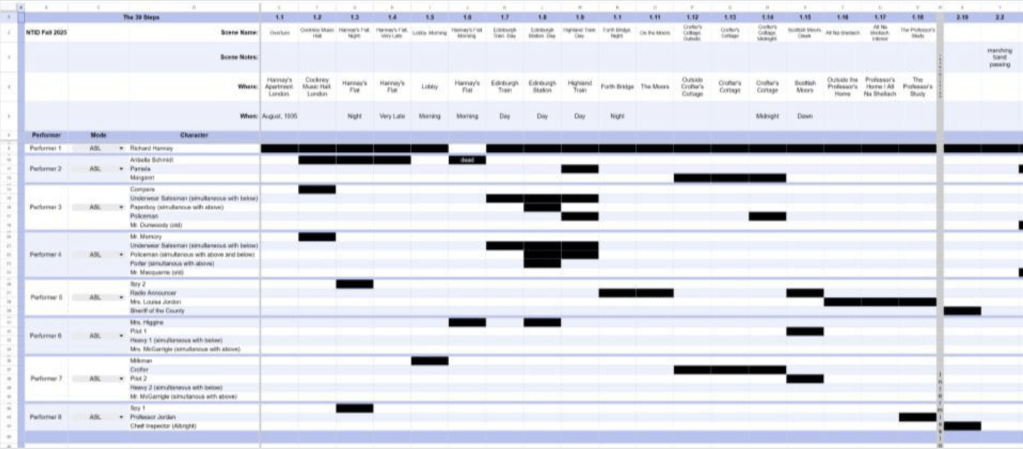
I created a costume plot (below) for the purpose of showing all the quick changes for easy access while I was designing. This is based on the text, and my assignment of roles based on the number of actors I speculated we would have.
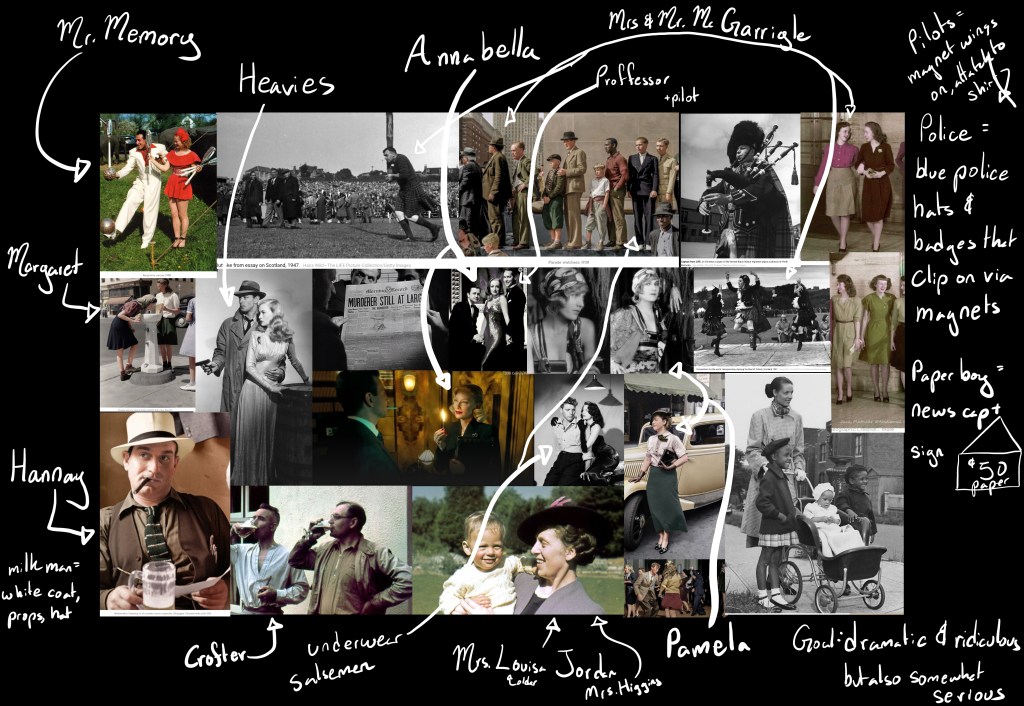
Overall Research Board to communicate overall visual vibe of the show in preliminary production meetings. Certain characters are called out as there are specific silhouettes and ideas I wanted to include, such as Annabella’s Bond-Woman like appearance.
Initial Costume Designs
Initial costume designs done based on my separation and assignment of roles. Costumes are designed to either work with specific quick changes, or are designed knowing that they have a lot of time and can perform full body changes in between characters.
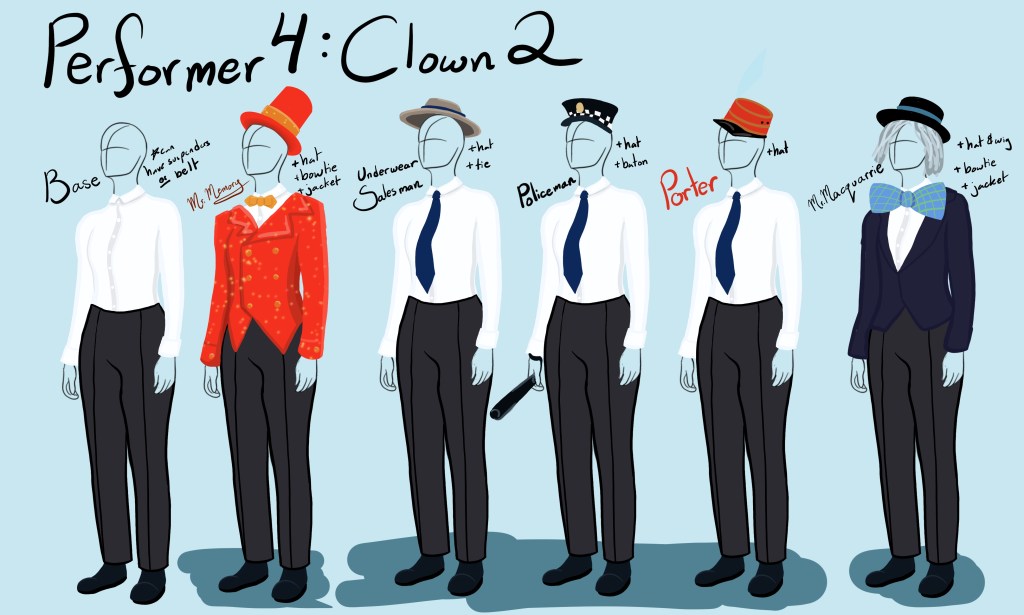
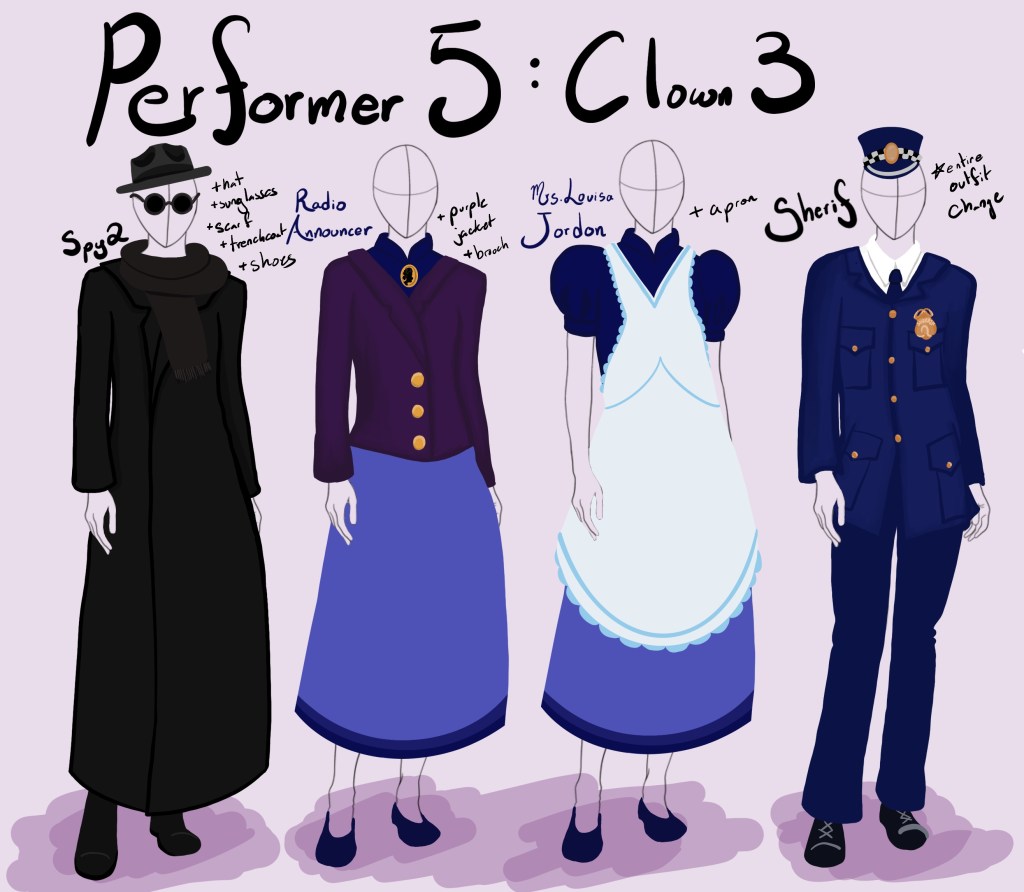
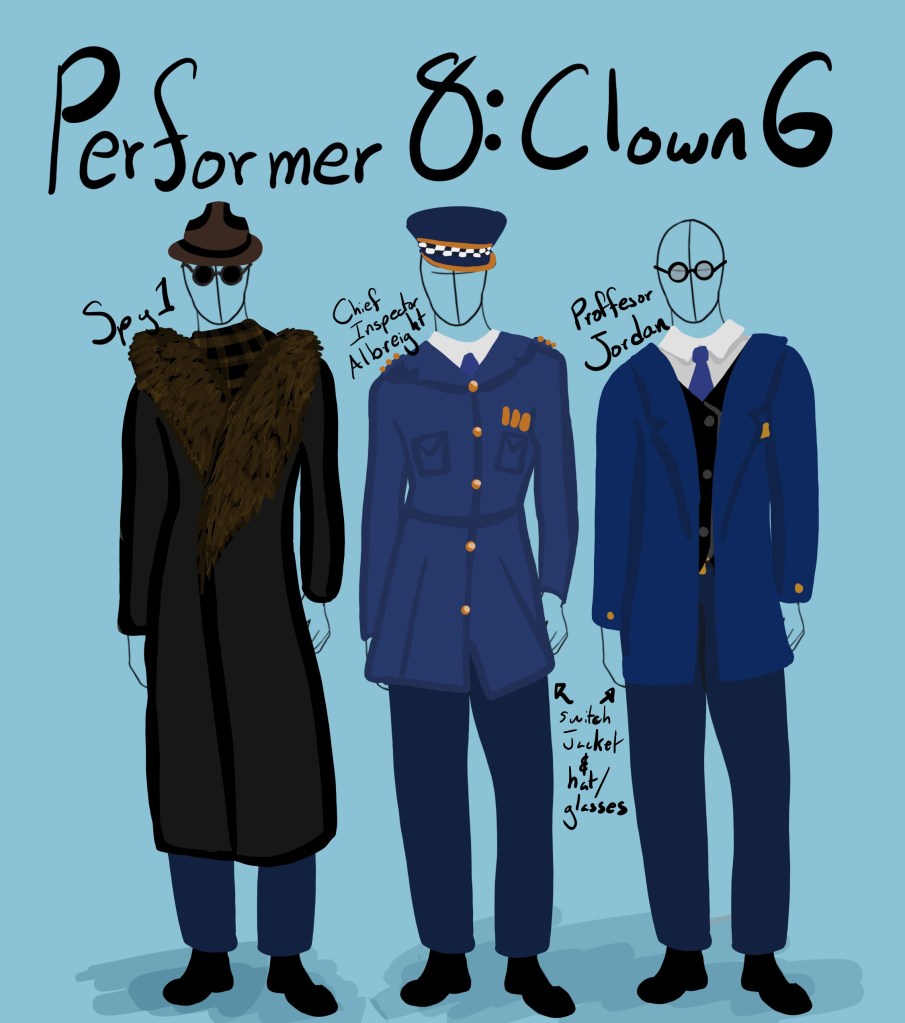
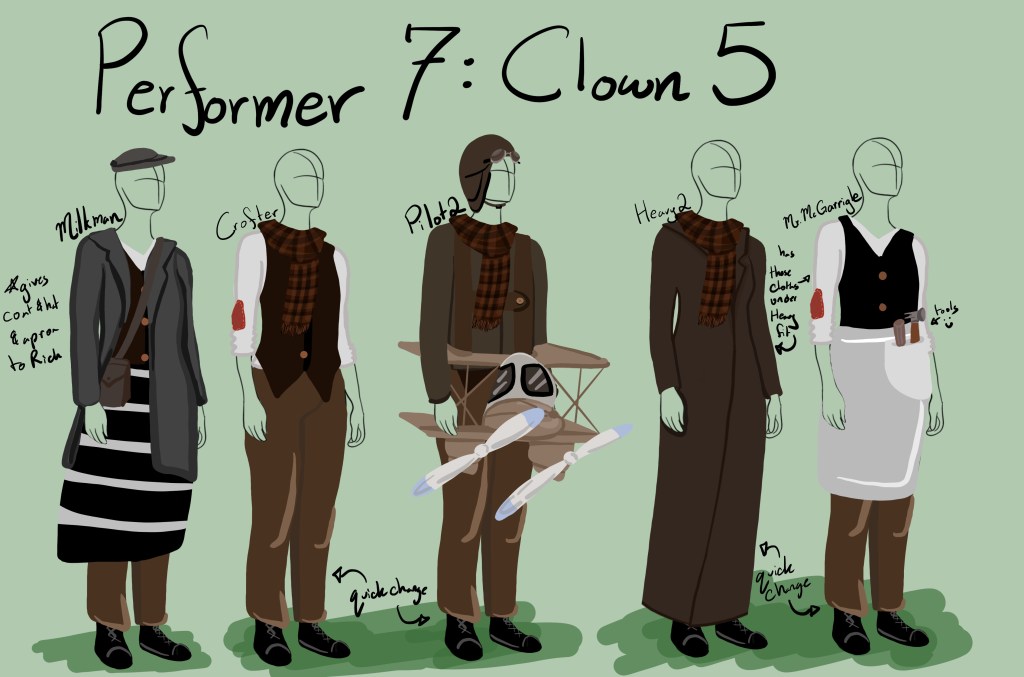
Initial Research Boards
Each character has a research board, but most are not included here due to the complexity of the renderings.
Build Process (during the semester)
I worked with NTID’s costume shop (costume shop manager, Rosie Mazique, and two student employees other than myself). This meant that many of the costumes were pulled or assembled from what the shop already had. Much of the items were also purchased, when we could not pull it. Because this is a period piece, it was easier to find clothing items to my liking already made. I, and the shop employees, did tailor almost every piece that we purchased or pulled.
Shown here are the most complex builds, or ones that might not appear obvious without attending the show. Other builds are self-explanatory and are not shown here.
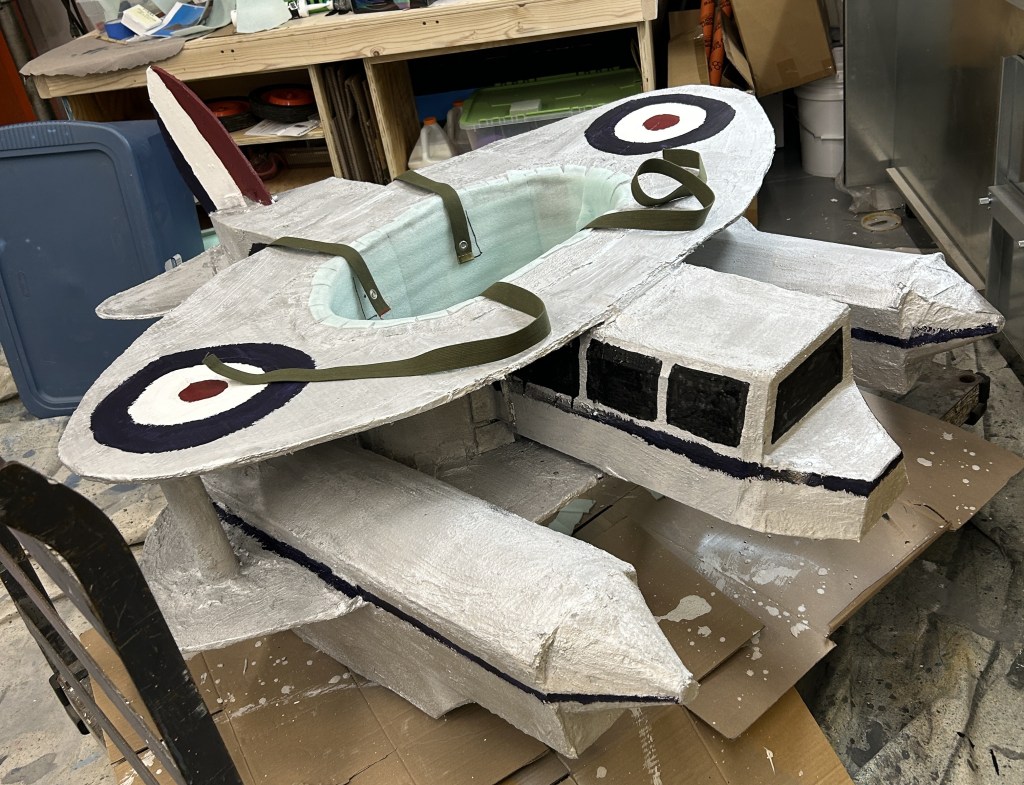
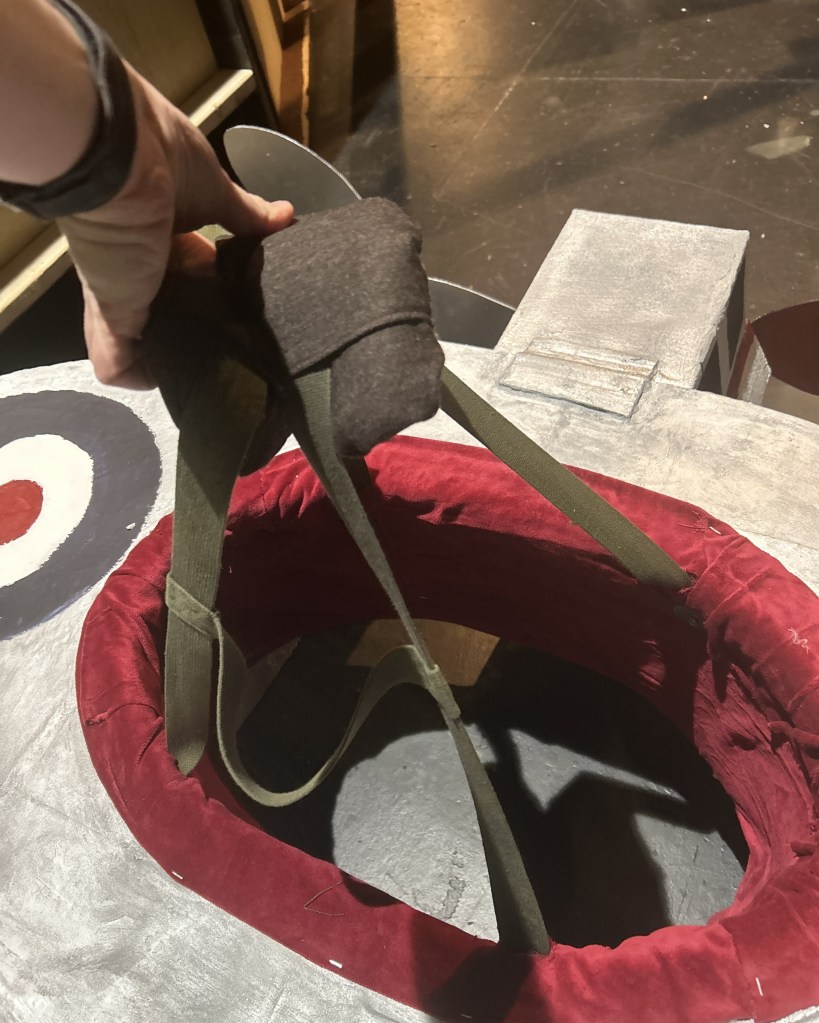
Pilot Costume Build
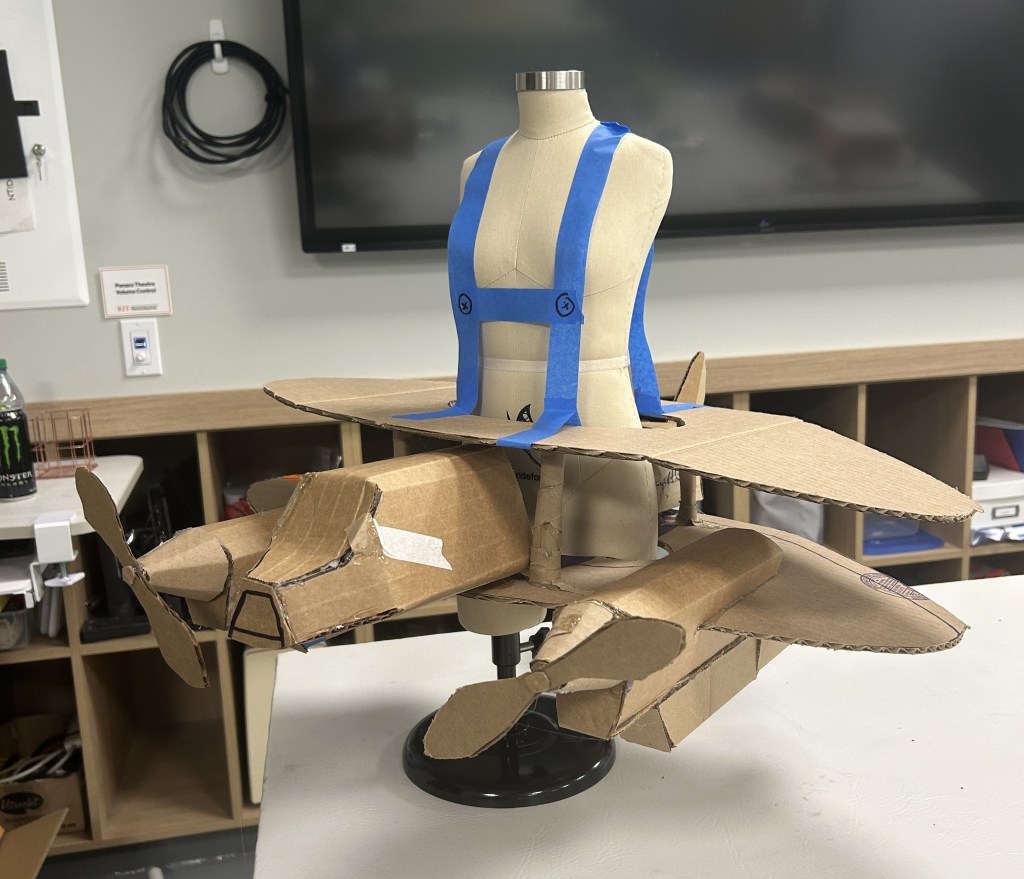
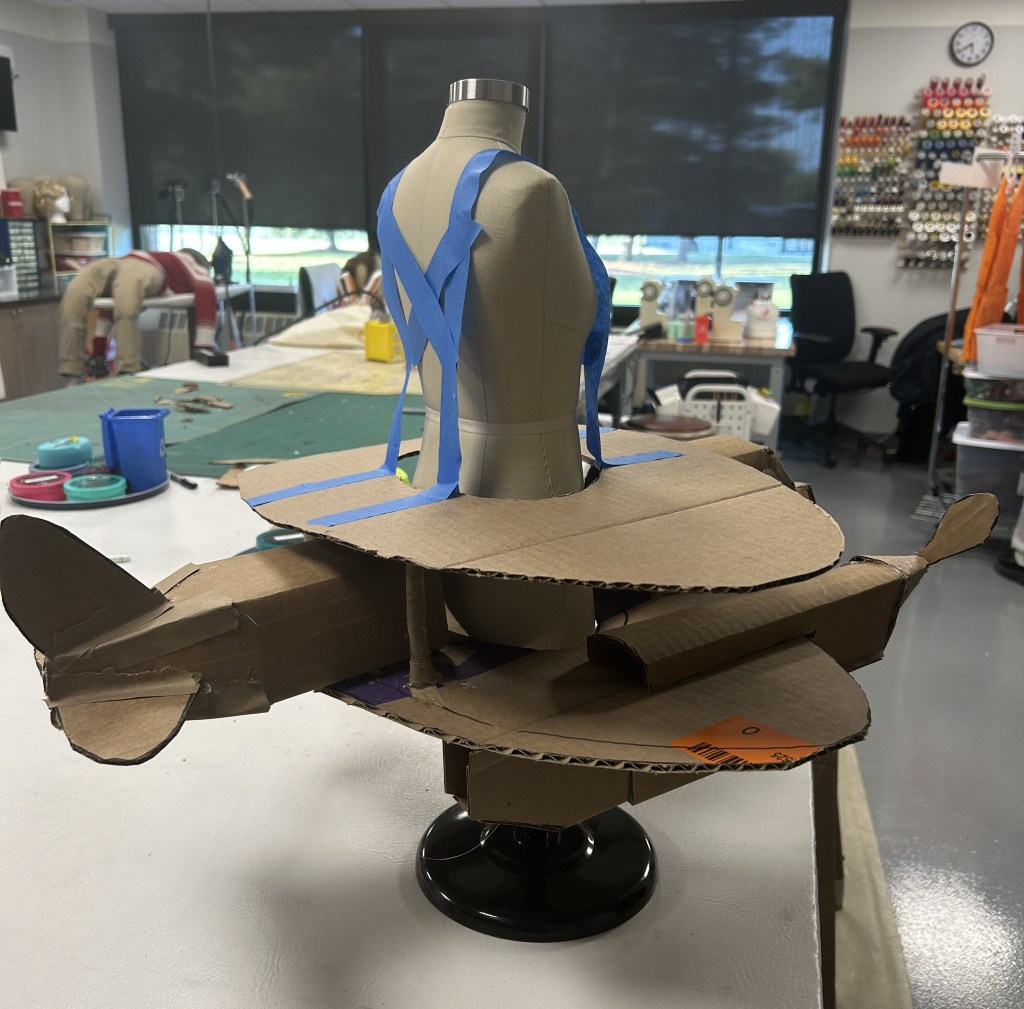
A small scale model was created, then a full scale pattern was created from my 1/2 scale model to make two full human-sized planes.
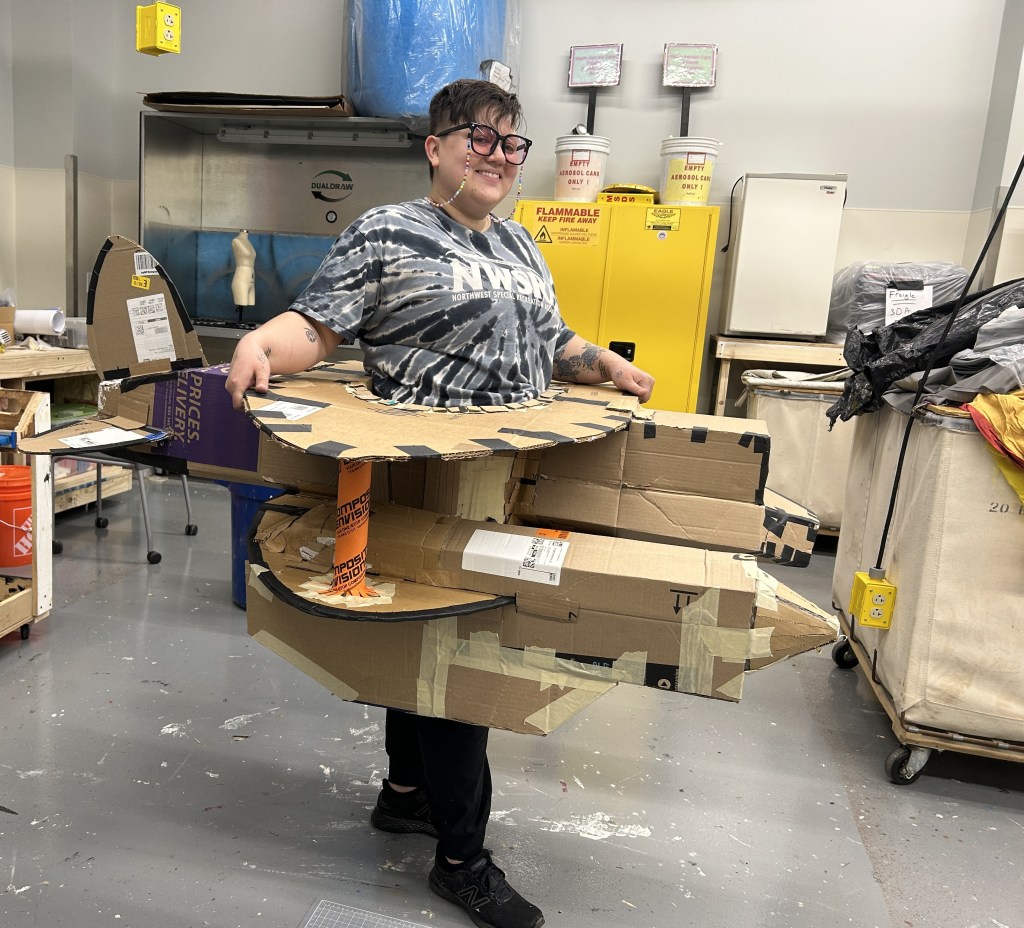
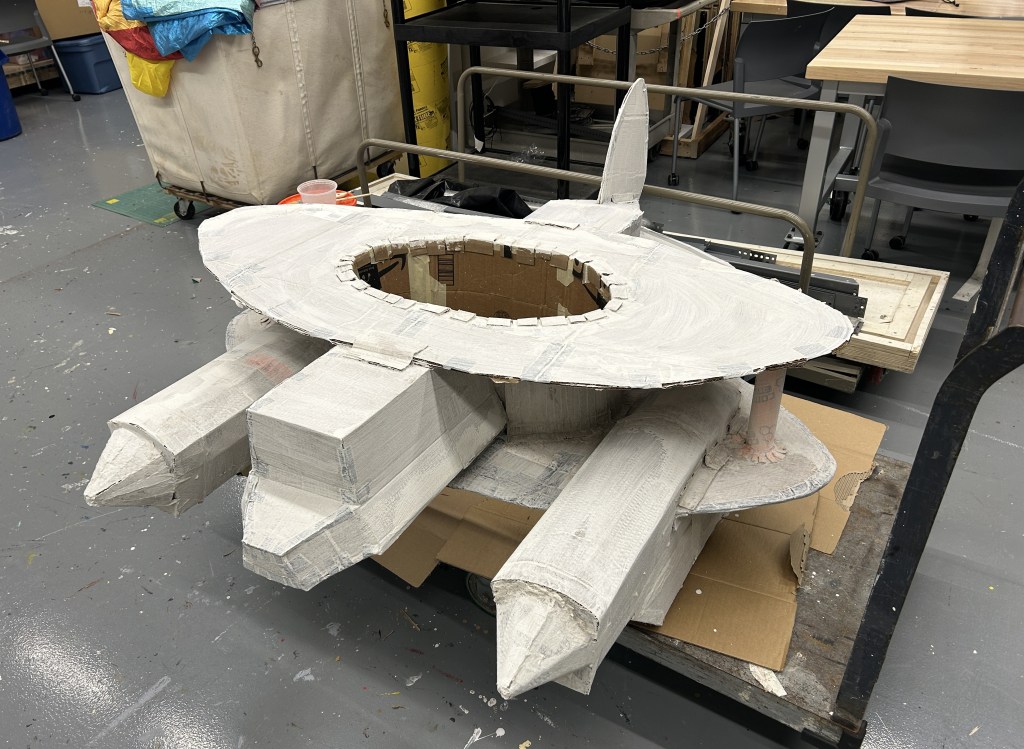
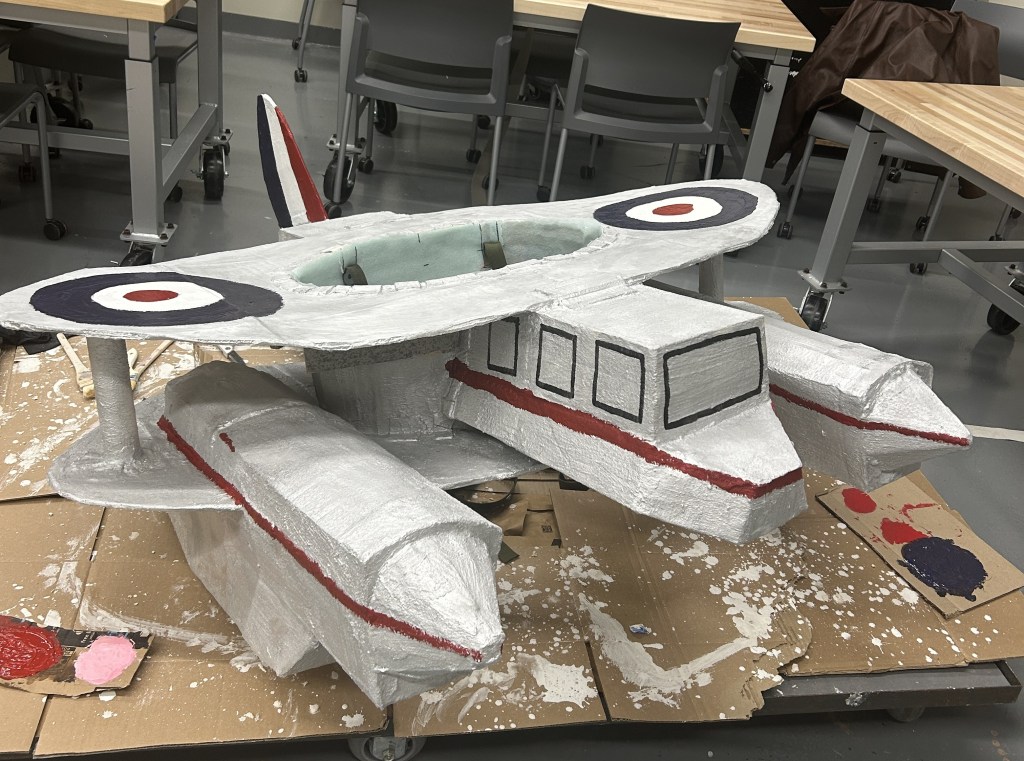
The planes were painted, then straps added to them and padding on the inside to make wearing more comfortable for the actors. Of course, I added some shoulder pads so that the plane straps don’t cut into their shoulders.
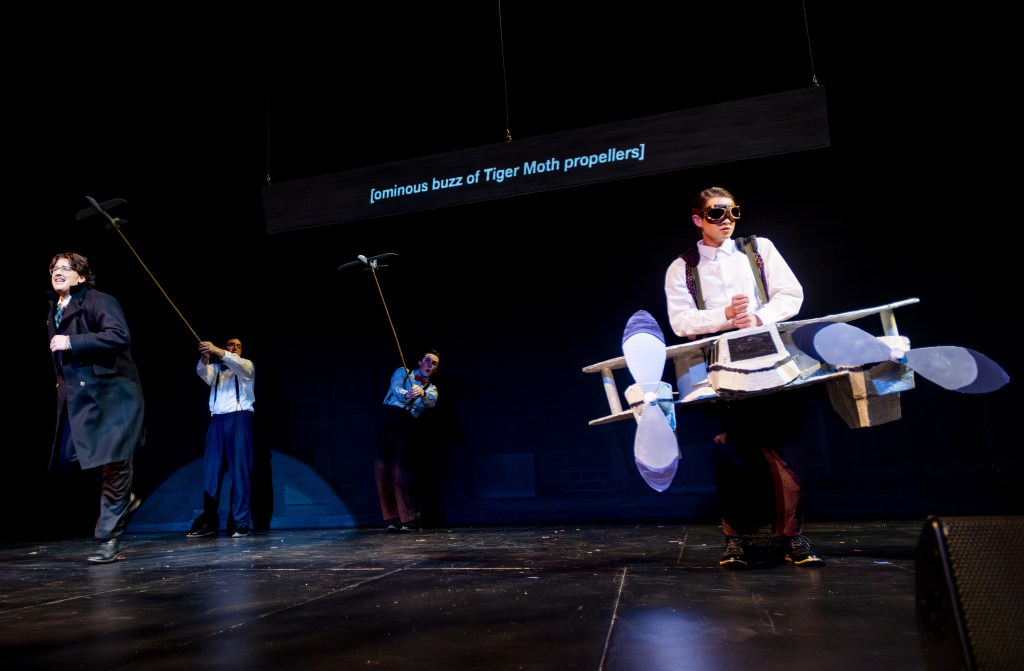
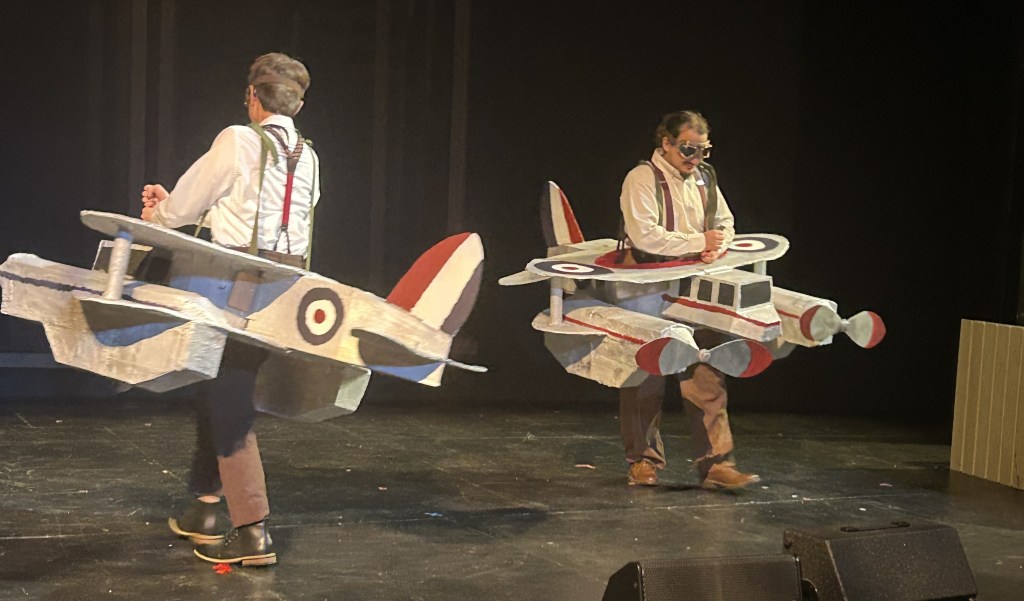
Annabella Knife Build
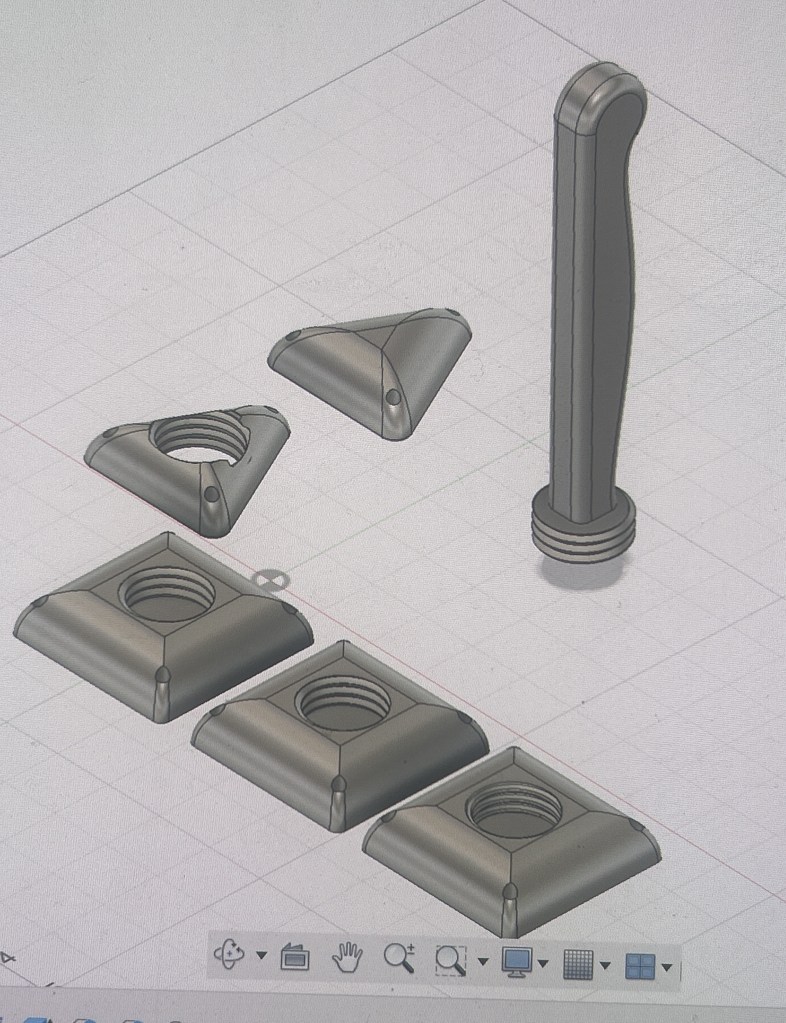
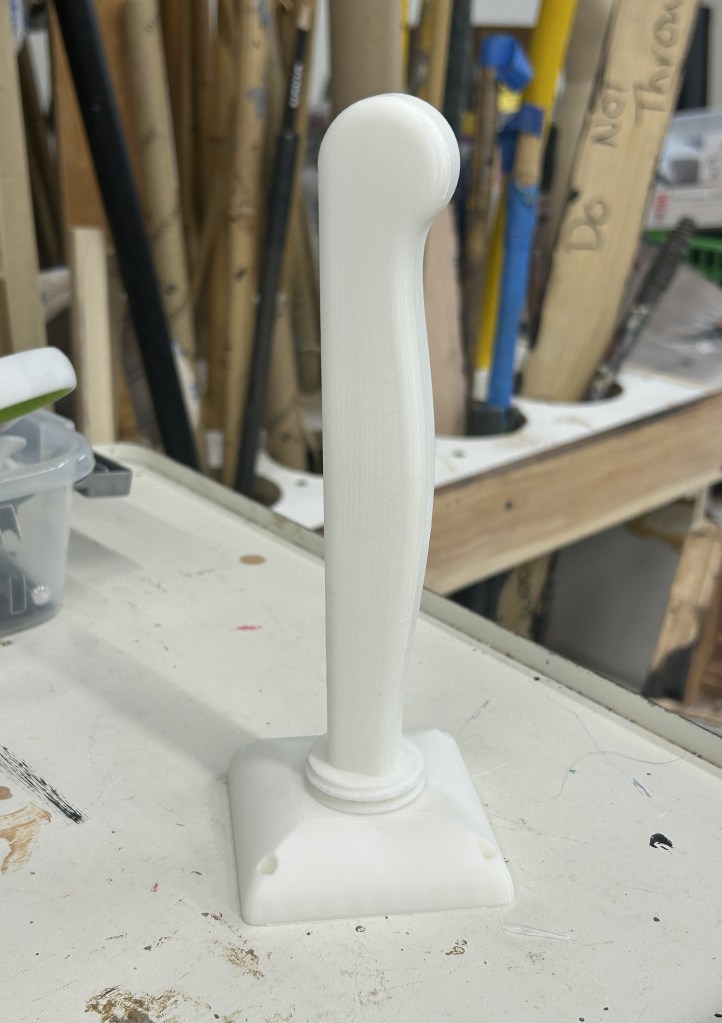
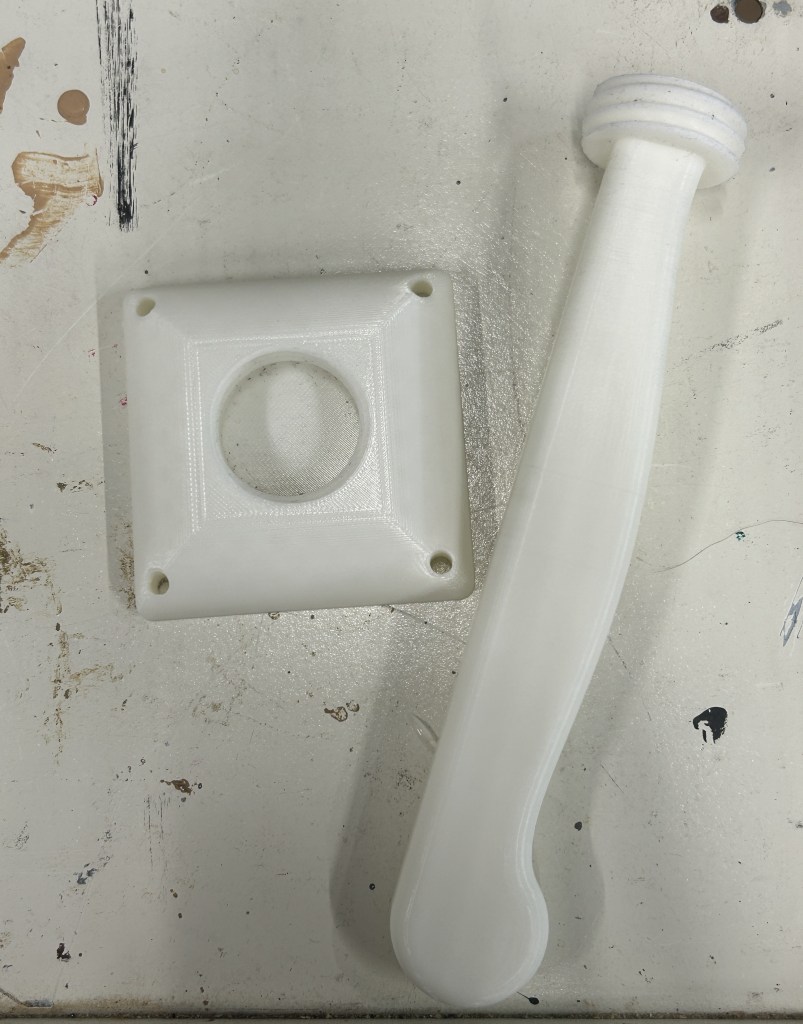
I 3D modeled the knife with a screw-in base, so that it would work for my dress and bra situation I was planning, and I worked with the props master to determine an acceptable knife shape.
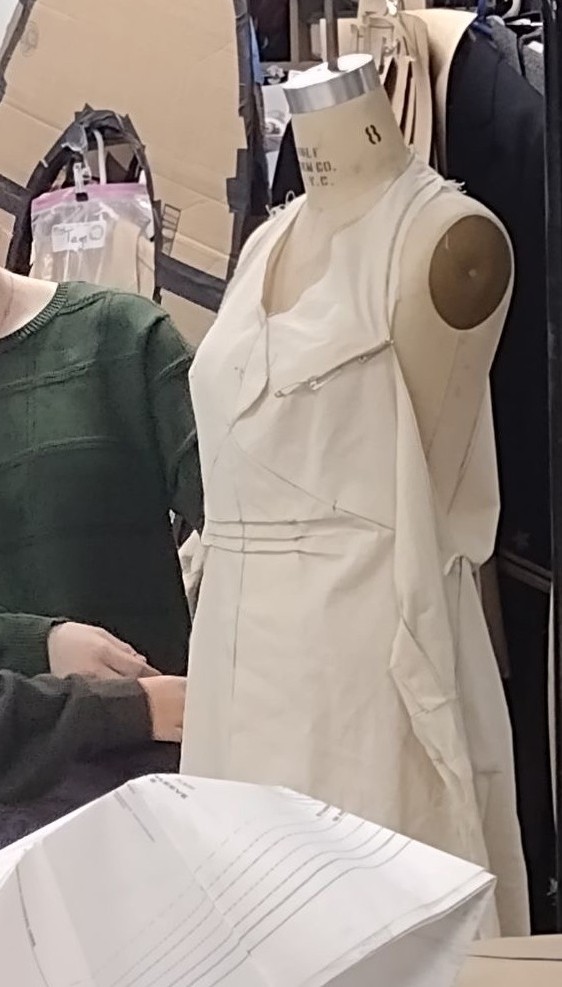
The props team then painted the knife to their liking, and the costume team sewed the base into the back of a halter bra that Annabella wears underneath her dress. We put magnets on the back of the dress so that it would be easily to open the dress, insert the prop knife, and then close up the dress around the knife handle (shown in video).